Ramblings

Do You Really Need to Offer a Freebie to Have an Email List?

(This post contains affiliate links, which means I may make a small commission at no extra charge to you if you click on a link and make a purchase. As an Amazon Associate, I earn from qualifying purchases. I greatly appreciate all the purchases you make using these links. Thank you!)

A few months ago I wrote about a book called Making a Living Writing Books for Kids by Laura Purdie Salas, which I highly recommend for children’s book writers.

In that post I stated the following:

“Some things mentioned in the book that I have heard over and over again yet I have not taken the leap to complete just yet include creating an email list, joining Twitter, and doing school visits.

All three of these are things I keep thinking about, but I keep telling myself I will do them if (hopefully when) I get a traditionally published book deal. In the meantime, I have my reasons (really just excuses) to not do each of them.

Baby steps. I will get there eventually.”

Well, I finally took the steps to create an email list. No, I didn’t get a traditionally published book deal (I wish!), but I decided it was finally time.

Emails Image by Muhammad Ribkhan from Pixabay

Image by Muhammad Ribkhan from Pixabay

Please don’t roll your eyes at my excuses, but creating an email list has been something I have been putting off for quite a while because …

… according to the CAN-SPAM Act, all business emails must include a valid physical mailing address. I didn’t feel comfortable putting my own home address on the bottoms of all of the emails, which left me with the option of renting a PO Box.

I have had a PO box before. In fact, the house I previously lived in did not have a mailbox, so a PO Box was mandatory. I have gotten so spoiled at my current location with not having to drive to the post office to check my mail, and I wasn’t sure if having a PO box would be a worthwhile investment. Would anyone actually sign up for my email list?

Well, if you sign up for my email list (which I now have as an option), you will see I now have a PO box.

Before creating an email list, I did some research (that’s just what I do!).

I’ve read many websites saying you must include a free incentive for someone to sign up for your email list. It could be a download, an ebook, an entire section of your website, etc. Essentially, you offer someone something for free with the catch that they must enter their email address. And voila, they are now part of your email list. Waa haa haa (my odd evil laugh).

Some websites have people sign up for their email list in order to get access to certain sections of their website, which I figured out how to do for my Fun Extras page. But when I went to do that, I actually felt bad. If someone wants to print off free coloring pages or activity ideas, I want them to be able to do that without any strings attached.

So, I did something that goes against the advice of all of the websites I read about creating email lists: I simply offered to provide updates on my journals, books, and writings. I’m not saying that offering something for free is bad. I’m just saying it is not what I am doing at this time…unless you count free updates as my free offer!

Brigitte Brulz Updates Logo

I don’t want people to sign up only because they want something for free and have no interest in anything else. I also don’t want to be holding back all of the coloring pages, activity ideas, and more for people who aren’t comfortable with providing their email address.

I know I’ve signed up to other people’s email lists simply because I was interested in hearing updates from them and wanted to know when they had more information available. I hope others will do the same for my email updates.

I’ve also signed up to email lists just for the free download and then unsubscribed right away. Yes, I’m like that. I get enough emails as it is. There is no point in me remaining on someone’s email list if I am not interested in anything else they are offering. And they don’t have to continue sending emails to me for no reason. That’s what I hope to avoid.

Unsubscribe Image by Denis Bogdan from Pixabay 

Image by Denis Bogdan from Pixabay

I even spent quite a while coming up with this as my email sign-up text:

“To Join or Not To Join…

Many websites make you enter your contact information for a FREE product. Not mine. Instead, you are welcome to enter your contact information if you would like to be kept up to date on any added fun extras, books, and journals created by me. I would love for you to join my email list! But, even if you don’t subscribe, you are still welcome to enjoy all of the FREE coloring pages, activity ideas, and more on FUN EXTRAS. You’ll just miss out on learning about all the new fun things as they are added!” 

Somehow, that doesn’t pop up anywhere on my website. If you’ve read this far, though, you’ve probably seen what actually does pop up. Thankfully, I was able to figure that out (I think!).

Within a couple of days of adding the subscriber popup form, I had one subscriber (who I don’t even know). Yay!

If you are interested in receiving updates about my writing adventures, journals, books, and fun extras, please sign up for my email list. I hope to send updates to all of my subscribers’ inboxes with a monthly e-newsletter (as long as I can figure it out). I have no intent on bombarding inboxes with email after email!

Subscribe Image

Image by Harshahars from Pixabay

Unfortunately, every time I try to install the email sign-up form within this post, it doesn’t work properly. (This is another excuse I’ve had for not creating an email list…I’m not very knowledgeable with all of the computer technology, and I knew it would take a lot of time to figure it all out.)

I am still trying to determine if there is a way for me to install a subscribe form on this post using the products I have. In the meantime, you should be able to sign up for my email list on any page or post on my website when the form pops up, which should happen when you have scrolled about halfway down the page. Otherwise, you are welcome to email me and let me know you are interested in signing up for my email list. I’m sorry for any inconvenience as I figure this all out!

If you aren’t interested in receiving updates from me, that’s okay, too. Thank you for reading this far!

So, do you really need to offer a freebie to have an email list? I guess we’ll see.

What do you think?

Events · Ramblings

My Experience at the SCBWI Adventures in Nonfiction Conference

(This post contains affiliate links, which means I may make a small commission at no extra charge to you if you click on a link and make a purchase. As an Amazon Associate, I earn from qualifying purchases. I greatly appreciate all purchases you make using these links. Thank you!)

Last year I learned a lot at the SCBWI Adventures in Nonfiction Conference, and I was excited when it was announced that there would be another nonfiction conference this year: Adventures in Nonfiction Part II.

Adventures in Nonfiction Part 2

The conference featured Senior Editor Carolyn Yoder and authors Jacqueline Briggs Martin and Miranda Paul. To prepare for the conference, I read multiple nonfiction books (and fiction books) written by Jacqueline Briggs Martin and Miranda Paul.

The night before the conference, I had the opportunity to go out to dinner with some other conference attendees/authors including Miranda Paul. It was a wonderful experience being able to speak with authors from Wisconsin, Illinios, Minnesota, and Iowa whom I had never met before.
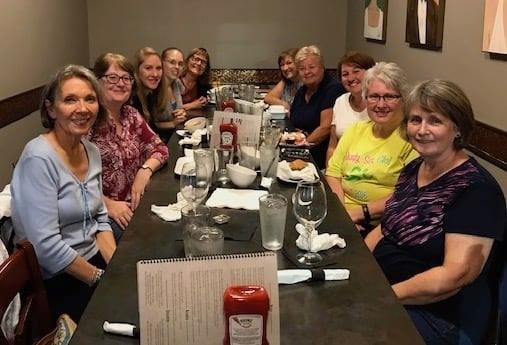
Preconference Dinner

During the conference, I had the pleasure of introducing authors Miranda Paul and Jacqueline Briggs Martin before listening to their presentations.

I came home with a lot of information, multiple pages of notes in a notebook, and a few handouts. I was also really excited to purchase a signed copy of the book Adventures to School: Real Life Journeys of Students from Around the World for my daughters who don’t have quite the adventure getting to school as some of these kids since they are homeschooled!

Adventures to School

It is amazing how much research and work goes into creating books! Miranda and her husband Baptiste Paul worked on Adventures to School together. She mentioned they had an entire room devoted to the research of this book with pictures and notes taped to the walls for each of the countries listed. They had to talk to a lot of people, listen to interviews, find translations, do online research, and more to accurately portray the characters listed in the book.

Even though Adventures to School states “the scenarios in this book are composites and the narrators’ voices are fictionalized…”, it is classified as nonfiction by the Library of Congress. This is actually something Miranda Paul discussed at the conference – how books are classified as nonfiction or fiction.

If you look at the copyright page and it says “juvenile literature”, then it has a nonfiction classification. If it says “juvenile fiction”, then it has been classified as fiction. Interestingly, some libraries don’t follow this classification, and the same book may be located in different areas in different libraries.

At the end of the conference, we had a draw name raffle for attendees to win books written by authors who were present and gracious enough to offer their published books as prizes. There was also an illustrator who graciously gave an illustration of hers as a prize.
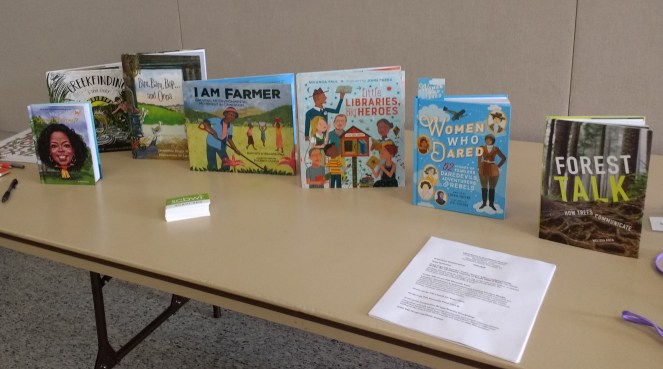
SCBWI Conference Book Prizes

The prize books included:

All of the conference attendees had their names placed in a box for a chance to win one of the autographed books. And I won…

I Am Farmer

I Am Farmer: Growing an Environmental Movement in Cameroon, which is another book Miranda Paul worked on with her husband, Baptiste Paul. The two of them actually travelled to Cameroon while doing research for this book!

During the conference, Miranda Paul showed us a great video about Farmer Tantoh that was filmed in Cameroon. You can also watch Meet Farmer Tantoh: Grassroots Environmentalist from Cameroon. Make sure to watch the video all the way to the end for a little chuckle. It’s amazing what Farmer Tantoh has been able to accomplish, and it is wonderful that Baptiste and Miranda Paul took the time to find the truth and write the story.

Here are some more things discussed at the conference by our speakers, who did an outstanding job:

  • what to include in a cover letter
  • bibliographies
  • examples of unique takes on famous subjects or topics
  • differences between primary, secondary, and tertiary sources
  • contacting experts in a field
  • page counts
  • making sure the world is relevant to the character in the story
  • how long it may take for manuscripts to become books
  • different types of nonfiction books
  • how books are classified by Library of Congress
  • format, structure, and style of nonfiction books
  • nonfiction books should not be boring
  • learning how to put our own manuscripts into categories
  • writing multiple versions of the same manuscript until it sounds right
  • self-editing tips
  • back matter
  • age of audience and their developmental milestones
  • hook and hold interest
  • comparable titles
  • who is responsible for cost of research (most of the time, it’s the author)
  • keeping records of sources
  • using all five senses in a book
  • creating a pitch for your manuscript
  • telling the story you are passionate about
  • places to find accurate information
  • how to research
  • having a through-line to your story
  • points of view in nonfiction
  • beginnings of nonfiction
  • biographies

I am so thankful I had the opportunity to go to this nonfiction conference. It gave me some ideas for a manuscript I am currently working on that is technically fiction but has a lot of educational components to it, so I am going to do some additional research, write a bibliography, and create some back matter for it.

What are you doing to learn more about a particular topic?

Ramblings · Writing Appearances

Breadmaking and a Balloon Experiment at Home

(This post contains affiliate links, which means I may make a small commission at no extra charge to you if you click on a link and make a purchase. As an Amazon Associate, I earn from qualifying purchases. I greatly appreciate all purchases you make using these links. Thank you!)

My daughters and I recently completed the Breadmaking Devotional on SchoolhouseTeachers.com, which we enjoyed. We didn’t make all of the recipes included within the course, but we did watch the videos, read the lessons and Bible verses, conducted the experiments, and baked a lot of different recipes.

Schoolhouse Teachers Breadmaking Devotional

Find more information about Schoolhouse Teachers here.

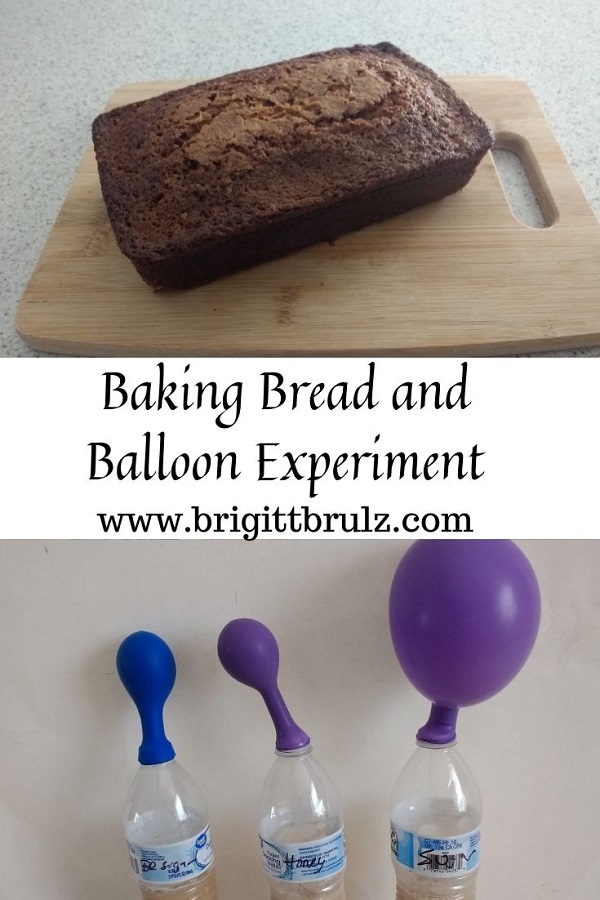
One of the experiments included in the Breadmaking Devotional involved putting a packet of yeast and 1 cup of warm water into three separate empty water bottles. Then, we added 2 teaspoons of brown sugar in the first bottle, 2 teaspoons of honey in the second bottle, and 2 teaspoons of white sugar in the third bottle.

Once the bottles had all of the required ingredients, we secured a balloon over each of the openings and waited. After some time, we were able to see how the ingredients affected the growth of the yeast by how inflated the balloons were.

Bread Making Devotional Balloon Experiment

Check out this Crazy Fun Balloon Activity Race Kids Love for more fun with balloons.

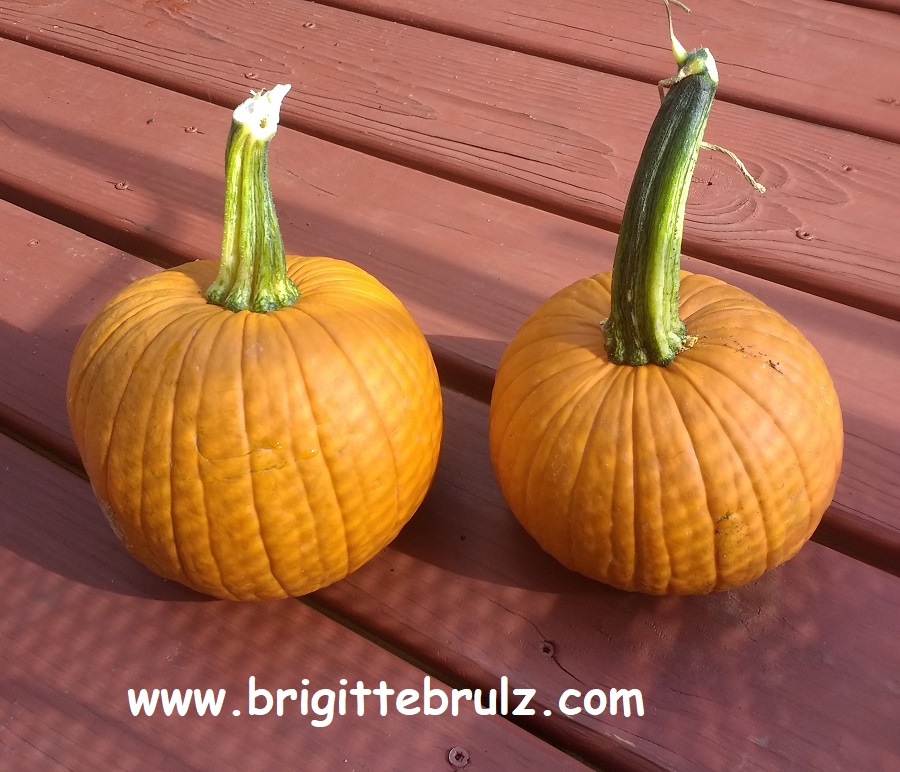
Speaking of experiments, my family tried another grand pumpkin experiment this year and attempted to grow pie pumpkins in the bucket part of a wagon similar to this one under our deck. The wagon had been dismantled, so we saved the top part as a large pot.

We successfully grew two pumpkins!

pie pumpkins on deck

Last year (when we did our grand pumpkin experiment) we made our own pumpkin puree using pie pumpkins my grandma had given to us, so we were really excited about the idea of making some fresh pumpkin puree using our own grown pie pumpkins.

Unfortunately, one of the pumpkins had grubs in it, so we ended up composting that one. I didn’t know if it would even be possible for us to successfully grow any pumpkins in a pot, so I was still happy we were able to get three cups of pumpkin puree from the remaining pumpkin.

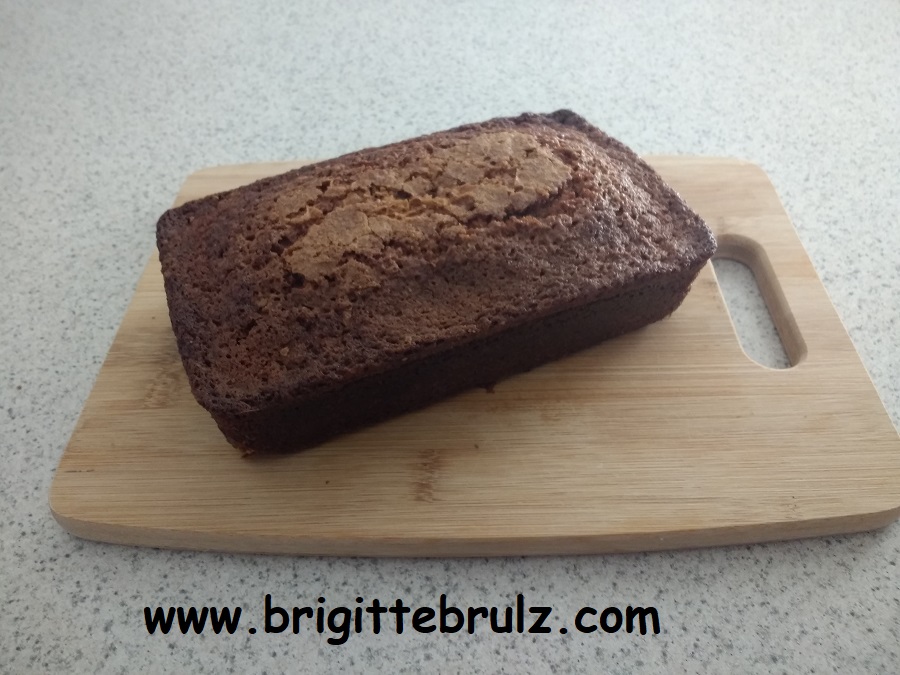
Since we had recently been given a pumpkin bread recipe and completed the Breadmaking Devotional course, my one daughter was really eager to make some homemade pumpkin bread. It tasted pretty good, although it probably could have stayed in the oven a little longer.

pumpkin bread

And we still have two cups of pumpkin puree to make a homemade pumpkin pie with. Yum!

Will you be baking any bread soon?

For more posts about baking and cooking, check out:

Pickle Making During National Pickle Month

Quick Fresh Salsa

Our Grand Pumpkin Experiment

10 Cookbooks for Kids

Ramblings · Themed Books

Nonfiction Picture Books for Kids

(This post contains affiliate links, which means I may make a small commission at no extra charge to you if you click on a link and make a purchase. As an Amazon Associate, I earn from qualifying purchases. I greatly appreciate all purchases you make using these links. Thank you!)

Last year, I attended an SCBWI nonfiction conference and learned quite a bit about writing nonfiction books for children.

This year, I’m excited for the opportunity to attend another SCBWI Adventures in Nonfiction conference featuring Senior Editor Carolyn Yoder and authors Jacqueline Briggs Martin and Miranda Paul.

Adventures in Nonfiction Part 2

You can find more information about the upcoming nonfiction conference on the SCBWI Iowa website here. Registration is now open for it!

Just like I did last year, I decided to read some books written by the authors who will be presenting at the conference. Even though Jacqueline Briggs Martin and Miranda Paul have published many books, these are the books I was able to check out from my local library.

Nonfiction Books by Jacqueline Briggs Martin

Jacqueline Briggs Martin will be discussing picture book biographies at the conference. Here are some of the nonfiction picture books written by her that I was able to find at my local library.

Alice Waters and the Trip to Delicious (Readers to Eaters, 2014)

This is a picture book biography about Alice Waters who was on a mission to make delicious meals to share with others using fresh foods. She started Chez Panisse, had the opportunity to cook for a U.S. president, won the James Beard Award for “Outstanding Chef of the Year”, started the Edible Schoolyard Project, and wants others to learn about growing fresh food for themselves.

Chef Roy Choi and the Street Food Remix (Readers to Eaters, 2017)

This is a picture book biography about Chef Roy Choi who calls himself a “street cook”. Roy Choi was born in Korea but has spent most of his life in Los Angeles. Searching for his path in life wasn’t easy for him, but he finally discovered his passion and joy by cooking for others out of a truck. His Korean barbecue in a taco was a success! He started Kogi, opened cafes, and opened a soulful fast food restaurant called Locol. He wants to show others the deliciousness of cooking with love.

Creekfinding: A True Story (University of Minnesota Press, 2017)

This is a true story about a man named Michael Osterholm who was on a mission to find a creek that had been covered with fields in Iowa. Through much work, dedication, and time, he was finally able to restore the creek. Now, instead of a field, the creek is flowing and filled with lots of wildlife.

I found it interesting that this true story took place less than an hour away from where my family once lived.


Farmer Will Allen and the Growing Table (Readers to Eaters, 2013)

This is a picture book biography about Will Allen who went from playing professional basketaball in Belgium to becoming a farmer in the middle of the city of Milwaukee. He started Growing Power farm, and he now grows many fruits and vegetables, raises red wigglers, and shows others how they can farm in cities. Thousands of people each year continue to visit his farm in Milwaukee, Wisconsin to “tour the greenhouses, watch goats, snack on greens, and go home planning to start a farm on a city lot, rooftop, or abandoned highway.”

This was another book that I found interesting due to the location of the story because I lived in southeast Wisconsin for quite a few years and was just in that area again recently.

Snowflake Bentley (Houghton Mifflin Company, 1998)

This picture book biography is about photographer Wilson Bentley (who became known as “Snowflake Bentley”) who lived from 1865 to 1931. He was intrigued by snowflakes and wanted to find a way to capture their beauty to share with others. His “parents spent their savings and bought the camera” Wilson Bentley wanted in order for him to pursue his dreams. Through a lot of patience, dedication, and creativity, Wilson Bentley discovered ways to capture the beauty of snowflakes on film. He enjoyed showing others his photographs and even had a book published with his snowflake photos.

The book states: “By 1926 he had spent $15,000 on his work and received $4,000 from the sale of photographs and slides.” That seemed like a lot of money for 1926, so my daughters and I Googled what that would be equivalent to in 2019 dollars. According to this inflation calculator, $15,000 would be equivalent to $217,070.34 and $4,000 would be equivalent to $57,885.42.

My family also watched this Youtube video after reading Snowflake Bentley to see some of Wilson Bentley’s beautiful snowflake photographs. It is quite amazing what he was able to do with the technology of that time!

The Chiru of High Tibet (Houghton Mifflin Books for Children, 2010

This is a true story about trying to save the chiru species. Chiru are animals that “look like antelope” and live in “the northern plains of Tibet”. They had once been very plentiful in that area but their population was significantly depleted when people started killing them to make shawls. For many years, no one knew where the chiru birthing ground was located. A man named George Schaller and four mountain climbing men took the initiative and (more than) one journey to find the location and ask the Chinese government to protect that land from hunters.

Nonfiction and Informational Fiction Books by Miranda Paul

Miranda Paul will be talking about creative nonfiction and informational fiction picture books at the upcoming conference. Here are the nonfiction and informational fiction picture books by her that I was able to find at my local library.

Adventures to School: Real-Life Journeys of Students from Around the World (Little Bee Books, 2018)

This nonfiction picture book written with Baptiste Paul describes the journeys children from thirteen different nations must take in order to get to school along with additional information about each of the nations.

It’s amazing to read what some of these children must endure in order to get to school. My daughters are truly blessed to be able to simply walk down the stairs to start school each morning.

Are We Pears Yet? (Roaring Brook Press, 2017)

This is an informational fiction picture book. Two pear seeds perform a play about the life cycle of pear seeds. The young pear seed is eager to become a pear but learns it first needs soil, rain, sun, and long naps (more than 2 years of naps) to grow into trees at which point the pear seeds need a costume change. Pears finally appear on the trees and an x-ray reveals two pear seeds within one of the pears. Extra facts about pears are given at the end of the book.

Nine Months Before a Baby is Born (Holiday House, 2019)

This picture book told in a poetic style goes through the process of a baby forming and growing before birth. Backmatter offers more information about the different stages of development.

One Plastic Bag: Isatou Ceesay and the Recycling Women of the Gambia (Millbrook Press, 2015)

This nonfiction picture book tells the story of how a young woman named Isatou Ceesay took the iniative to make Njau, Gambia beautiful again after plastic bags had accumulated in the area causing unwanted water, mosquitoes, disease, and dying goats. With help from some other women, the bags were cleaned and transformed into beautiful hand-crocheted purses, which could be sold to others.

Water is Water: A Book About the Water Cycle (Roaring Brook Press, 2015)

I found this book in the fiction section at my library, but it is informational since it discusses the water cycle in poetic form. The backmatter found at the end of the book offers additional information about water including words like evaporation, condensation, precipitation, seepage, and more.

Fun Fiction Picture Books by Miranda Paul

Here are the some fun fiction picture books written by Miranda Paul that I found at my local library.

10 Little Ninjas (Knopf Books for Young Readers, 2016)

Told in the same fashion as “10 Little Monkeys Jumping on the Bed”, this picture book has 10 little ninjas, 9 tiny astronauts, 8 rapid racers, 7 prowling tigers, 6 rowdy cowboys, 5 hungry reef sharks, 4 thirsty firefighters, 3 quiet pirates, 2 sleepy dragons, 1 little cuddlebug, and finally 10 sleeping kids.

The Great Pasta Escape (Little Bee Books, 2017)

This fiction picture book filled with humor and pasta puns is about noodles in a factory that were content following the rules until they discovered they were made to be eaten. After examining all of the evidence and confirming this was true, they strategized an escape plan together.

Mia Moves Out (Alfred A. Knopf, 2018)

Mia decides the obvious solution to her brother taking over her room is to move out. So, begins her journey of finding a new place to stay. The bathroom, basement, and cupboard prove to be bad choices. She finally finds a place she likes but realizes it’s missing something (really someone – her brother). That’s when she comes up with the idea of creating a fort for her and her brother to enjoy together outside.

Trainbots (Little Bee Books, 2016)

This rhyming picture book is about trainbots becoming hero-bots to get rid of the evil badbots, so they can deliver toybots to kidbots. How a-bot that description?

Reading all of these books makes me really excited for the upcoming SCBWI Adventures in Nonfiction Conference. Which book is your favorite?

Ramblings · Writing Appearances

How to Make Math Memorization Fun

If you are looking for a resource filled with advice on how to teach reading, writing, and math for preschool through high school, make sure to download From ABCs to SATs: The 3 Rs and Everything in Between. It is FREE!

One of my writings entitled Math Memorization Fun was published in this supplement. This particular article discusses 14 different “math-tastic” activities to make memorizing math facts fun using supplies you probably already have at home.

Get Your Copy of The Old Schoolhouse's From ABCs to SATs supplement

Click here for tips on how to make math worksheets fun.

You may recognize the racing cars tip from a post I had published on Hands On As We Grow entitled Simple Number Line Car Race to Teach Math.

Race Car Math

A separate section in the article includes a couple of ways to use cards to teach simple math skills. Recently, I was visiting family and learned a math card game called 99 (from an 8 year old), which wasn’t included within this article.

To play the game, each player is dealt seven cards (which he or she can look at but not show others). The remaining cards are placed in a stack face down in the middle of the players.

The whole point of the game is to add (and subtract) the numbers on the cards from each player’s hand as they are laid face up in the middle. Whichever player lays the card to get exactly 99 wins the game. Each of the numbered cards are worth the number they have on them, the Aces are each worth 1, and the Jacks, Queens, and Kings are each worth 10.

The player to the left of the dealer lays one of their cards face up next to the stack of cards in the middle. As players lay the cards, they add the points together. For example, if player one lays a 6, the total is 6. Then player two lays a Queen, the total is now 16 (6 +10). Player three lays a King, the total is now 26 (16 + 10). The only time the numbers are not added is when a 10 is laid. If a 10 is laid, then players must subtract 10 points from the total score.

Each time a player lays a card, they must draw a new card so they always have 7 cards in their hand. Play continues until one player reaches exactly 99 with a card he or she lays.

I think the kids have so much fun playing it that they don’t even realize they are practicing adding and subtracting!

Do you have any fun tips on how to practice math?