Journals

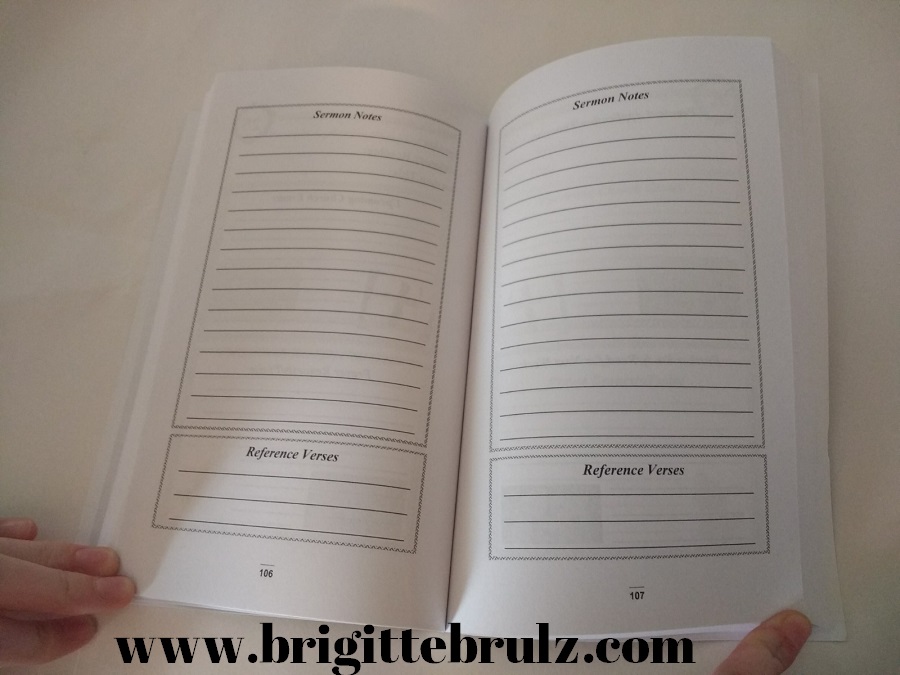
Sneak Peek of Sermon Notes Journal

I have really enjoyed creating and publishing journals for various reasons. I published reading journals for my daughters to record all of the books they read, adventure writing prompt journals for some writing fun with my daughters, and field trip journals to record all of our field trip adventures.

Below is a picture I took last month. One of my daughters was filling out her field trip journal for the field trip we took at an airport while my other daughter was filling out her reading journal for the latest Who Was book we had read together. (You can see the list of Who Was series books we have read together so far on my Pinterest board here if you are interested.)

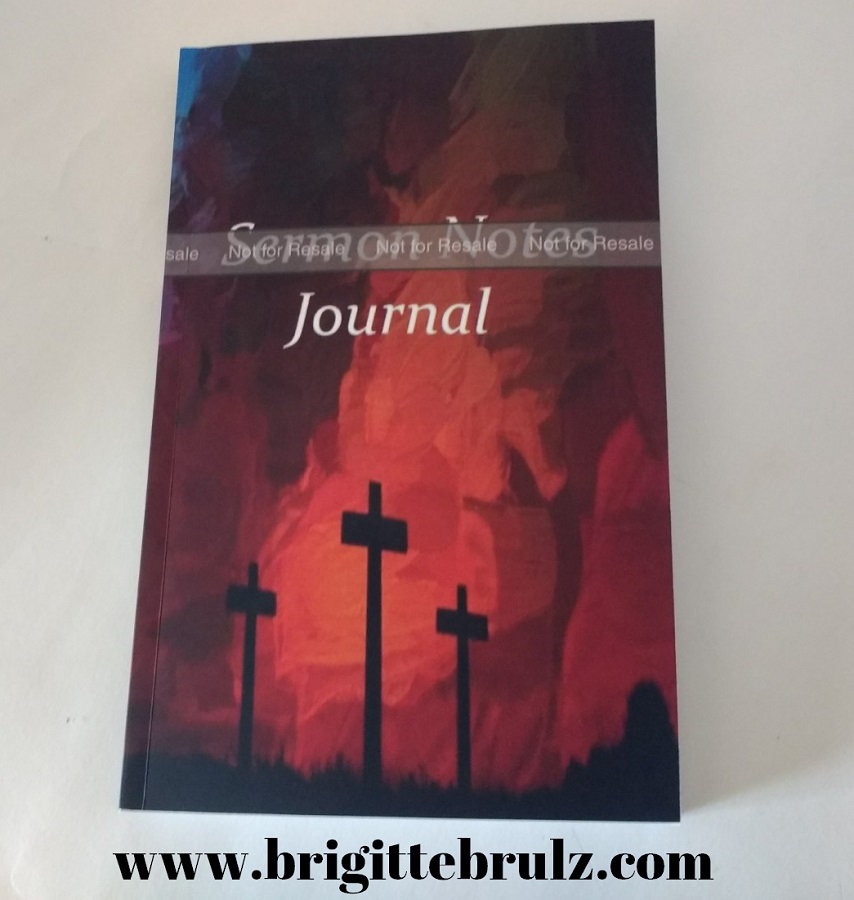
Now, I am in the process of publishing a sermon notes journal. I received the proof yesterday. For those of you who don’t know, a proof is the physical copy of the journal (or book) I receive to review before publication. The proof says “Not for Resale” across the front cover, but the actual copies will not have that banner.

Below is a picture of the cover of the sermon notes journal proof. I chose to use a matte finish on the cover, which I think turned out well. All of my other books and journals have had a glossy finish, but I think the matte finish suits this journal better.

This easy-to-carry 5.5″ x 8.5″ softcover sermon notes journal allows the journal owner to record and reflect on sermon notes, prayer requests, upcoming church events, and more. The journal is about 1/2 inch thick and should be small enough to fit inside a Bible case.

I considered publishing the journal as a spiral-bound journal instead of a softcover journal because I thought that would make writing in them even easier during a sermon. Unfortunately, I had some issues with this idea including the fact the cost would be substantially higher.

There is a page for the journal owner to write his or her name. I also included a customizable table of contents. (Journal owners can write the name of the sermon title and/or date of the sermon on the line next to the appropriate sermon number in the table of contents for easy reference.)

I have space for 52 sermons which is enough to write one for each week of the year. I considered doing a few extras for additional sermons around the holidays but decided to stick with 52.

Each of the 52 weeks has the same repeating four pages.

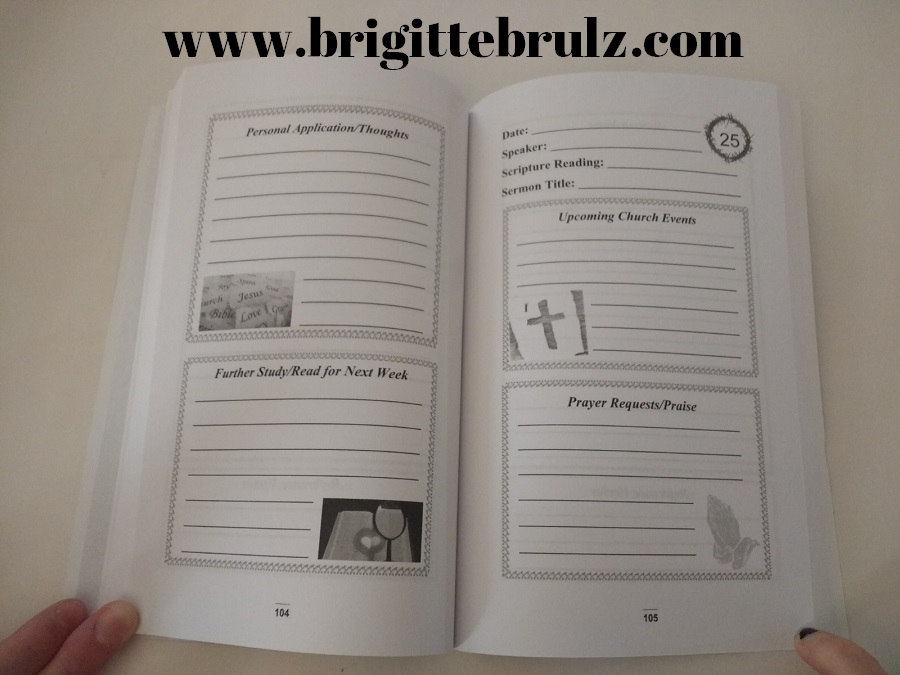
The first page of each week provides space to write the date, speaker, scripture reading, sermon title, upcoming church events, and prayer requests/praise. (The text in the journal appears much clearer than it does in these pictures. Sorry about that.)

The second and third pages of each week provide space for the actual sermon notes and reference verses.

The fourth page of each week has space to write personal application/thoughts from the sermon and further study/read for next week.

The end of the sermon notes journal includes “a call to action”.

I also included a page for all of the image credits for the images I used throughout the sermon notes journal.

There are a few things I would like to update in the sermon notes journal before officially publishing it. My goal is to have it published and available on Amazon by the end of March 2020.

I’ve got some more ideas for other journals, which I hope to create and publish yet this year. I’m also still working on Aah! Blown Away, Crash! with my daughter, the first draft of an adult nonfiction book all about self-publishing basics, and a secret project.

I hope to share information about the secret project with you before the end of this month. Stay tuned! (You are welcome to join my email list to receive a monthly e-newsletter to stay current with all of the fun extras, journals, books, and writing projects.)

Processing…
Success! You're on the list.

May you have a wonderful week!

Themed Books · Writing Appearances

10 Children’s Books for St. Patrick’s Day

(This post contains affiliate links, which means I may make a small commission at no extra charge to you if you click on a link and make a purchase. I greatly appreciate it when you make purchases through these affiliate links. Thank you!)

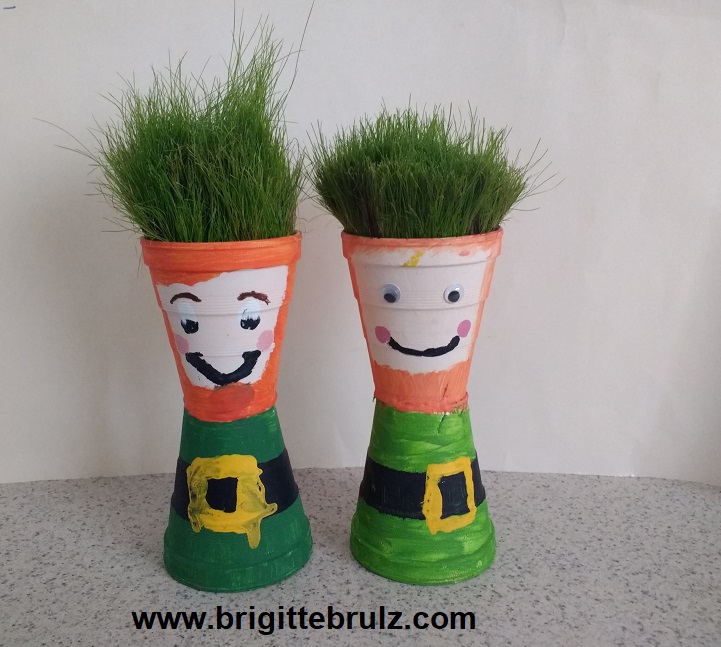
St. Patrick’s Day is already next week! If you are looking for a fun St. Patrick’s Day activity to do with your kiddos that is perfect for spring, make sure to check out my most recent post on Hands On As We Grow: Grow a Leprechaun Craft for St. Patrick’s Day.

St. Patrick's Day Planted Leprechauns

My daughters and I actually made these on Thanksgiving Day, so I could submit my post by January 1st. The little leprechauns are still hanging out in one of our windowsills. My daughters had a lot of fun charting the growth of their leprechaun’s hair. They even held a contest amongst themselves on whose leprechaun’s hair grew the longest and the craziest. It didn’t take long for the leprechauns to receive their first hair cuts!

As a side note, I noticed my post was edited to include the words “Erin Go Bragh”. I have to admit, I had no idea what that meant. After a quick online search, I found that it means “Ireland till the end of time” or “Ireland Forever”. Interesting!

Besides doing some fun St. Patrick’s Day crafts, make sure to curl up and read a few St. Patrick’s Day books. All of the books I have listed below are books I was able to find at my library.

Books about Leprechauns

Ten Lucky Leprechauns by Kathryn Heling

Count the leprechauns from one to ten as you repeat “Fiddle-de-fizz, ’tis magic, it is!” throughout this simple rhyming book.

The Littlest Leprechaun by Brandi Dougherty

Liam is a leprechaun who wants to have an important job like the other leprechauns. He tries many different jobs but discovers he is still too small to do any of them until someone needs his help, and he is just the right size for the job. Soon, he is busy doing many different jobs that only he can do with his new special friend.

How to Catch a Leprechaun by Adam Wallace

A sneaky little leprechaun is on the loose and wreaking havoc throughout this rhyming picture book. The reader never learns how to actually catch a leprechaun but sees various examples of traps that didn’t work. The mischevious leprechaun was too smart or too quick for each one of the traps! Will you be able to make a trap to catch a leprechaun?

How to Trap a Leprechaun by Sue Fliess

This is another rhyming picture book. A group of kids devises a clever plan to trap a leprechaun, and they think it works. Unfortunately, the leprechaun escapes. But there’s no need to “shed a tear” since they can “try again next year”!

Happy St. Patrick’s Day by Roger Priddy

This rhyming board book tells all about leprechauns. The shamrocks are cut through the book and appear on every page going from biggest to smallest.

Books for St. Patrick’s Day Celebrations

Let’s Throw a St. Patrick’s Day Party by Rachel Lynette (8-12 years)

Learn about St. Patrick’s Day, St. Patrick, shamrocks, and how to throw your own St. Patrick’s Day party. Use this book as a reference of ideas as you consider food, decorations, invitations, and crafts to go along with a St. Patrick’s Day party.

Let’s Bake St. Patrick’s Day Treats! by Ruth Owen (6-9 years)

Use this book to learn how to make shamrock cookies, St. Patrick’s Day cupcakes, green pistachio muffins, a giant leprechaun cookie, a rainbow layer cake, and rainbow treasure cupcakes.

More Books for St. Patrick’s Day

Celebrating Holidays: Saint Patrick’s Day by Rachel Grack (4-8 years)

Simple text explains St. Patrick’s Day. A recipe for Irish soda bread is also included.

What is St. Patrick’s Day? by Elaine Landau (5-8 years)

Learn about St. Patrick, Ireland, St. Patrick’s Day celebrations, symbols of St. Patrick’s Day, and more. The end has an explanation of how to grow your own “cup of green”. (I actually didn’t see this book until after we had already done our St. Patrick’s Day leprechaun grass project.)

Green Shamrocks by Eve Bunting (4-8 years)

Rabbit decides to plant some shamrocks in anticipation of St. Patrick’s Day. He continues to take care of his shamrocks plants as they grow day after day. Unfortunately, he gets up the morning of St. Patrick’s Day to discover his yellow pot filled with his precious shamrocks has disappeared and no one seems to know where it could have gone until…he talks to Goat. Will Goat and Rabbit be able to compromise in time for the St. Patrick’s Day parade?

Check out these posts for more themed books:

14 Children’s Books About Flowers

14 Children’s Books About Seeds, Plants, and Gardening

21 Children’s Books About Apples

Being an Author · Ramblings

Pinterest Tips for Authors to Market Books

I can’t believe it is already the beginning of March! How are you doing on your goals for this year?

I have so many writing projects and ideas I want to work on that I either haven’t started or haven’t gotten as far as I would like. But I’m going to keep working at them one step at a time! I encourage you to continue reaching for your goals.

Reach High and move one step at a time

A few things I have been working on include a field trip journal I created and published last month, a children’s book entitled Aah! Blown Away, Crash!, writings for Hands On As We Grow (two of them are scheduled to be published this month), some updates and posts for my website, and a nonfiction adult book all about self-publishing basics. I’ve also attended an SCBWI webinar entitled Finding Your Agent Match and listened to some interviews from the Wealthy Author Summit.

Unfortunately, the weather did not cooperate in January for the monthly writer meeting I now have the privilege of organizing as an SCBWI Iowa Social Regional Chair (formerly known as a Network Chair). It is absolutely amazing to me how the opportunity for me to be a part of this fantastic group came about, but that’s a story for another day. I have learned so much from the other writers that are part of this group, and I really appreciate their generous feedback and support when they critique my manuscripts.

Our group was finally able to get together again in February, and we discussed the topic of using Pinterest as an author. Between the research I did to prepare for the meeting and the discussion with my group at the meeting, I learned quite a few Pinterest tips for authors.

It occurred to me recently I have been learning a lot on my writing adventure, and I would like to pass on some of that knowledge to others who may be just beginning their own writing adventure. So, I have created a list of Pinterest tips for authors based on my most recent findings. I’m definitely not a pro at this, and I’m obviously still learning!

Ways for Authors to Promote Books on Pinterest

Use a Business Account

Business accounts have additional features personal accounts do not have. Business accounts allow you to track analytics, see the number of views and clicks on each of your pins, advertise pins, and claim your website for even more benefits. Business accounts are free to set up and use.

It’s recommended to use the same photo on your Pinterest business account that you use for all of your online platforms for branding reasons. Also, make sure to “claim your website” and double-check the ‘search privacy’ setting is marked as ‘no’.

Keep business Pinterest accounts and personal Pinterest accounts separate if you intend to have one of each. Your business account should be professional and engaging.

You can find more information on how to set up a business account here.

My business account Pinterest page

Know Your Target Audience

Who is your target audience? This is an important question to answer as you create a Pinterest account. After all, you should be using your account to build a community type-setting for your target audience.  

Target audiences for authors may include readers, librarians, teachers, and/or other writers. To get an idea of what your audience may be interested in, you can look at the Pinterest accounts of other authors in your genre.

It is possible to have more than one target audience if you write in a variety of genres. If this is the case for you, then tailor each of your boards to a specific target audience. People can choose to follow all of your boards or individual boards that pertain to them.

Add Relevant Boards

Relevant boards can be determined based on your target audience. A board all about serial killers is probably not a relevant board for you if you write only for children. What would your target audience be interested in? What would they be looking for? How can you add value for them?

Authors can create boards for each of their books, writing tips, writing quotes, or anything else that may go along with their books and writings. No matter what the boards contain, the names of the boards should make sense to the viewer.  

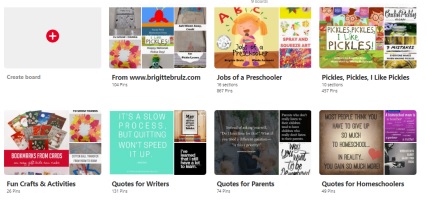
Since my meeting, I have added some boards to my Pinterest page. I now have fourteen visible boards targeted towards different audiences. I have a board for each of my books along with various activities and crafts to do with them for teachers and parents. My boards with quotes, children’s books & journals, and fun crafts & activities are intended for parents (although teachers may like some of these, too). I also have boards specifically for writers and authors to view. An additional board contains pins that are all linked directly to my website.

Notice, I said “visible” boards. I also have “secret boards” that are not visible to the public. These ones are for boards I am currently working on that I am not ready to make visible, a board to save pins I would like to share at a later date, and personal boards. So, you can also use secret boards if desired.

Use Board Sections as Needed

Personally, I like having things organized and Pinterest now allows users to create sections within boards for better organization.

Additional board sections may include settings, characters, or other topics mentioned within a book. Some authors may actually find it beneficial to create a character section as their own character profile while writing a book.

I added separate sections for each of my books that focus on different aspects of them. For instance, Jobs of a Preschooler is divided into 16 sections based on each job mentioned in the book. Each of those sections contains crafts and activities parents and teachers can do for that specific job. Pickles, Pickles, I Like Pickles is divided into 10 sections based on different pickle-related topics. I feel having the different sections makes the book’s activities easier to navigate and use.

Sections in the Jobs of a Preschooler board

Have Consistant Board Covers

Pinterest is a visual platform, so it makes sense to make your boards visually appealing. One way to do that is by making the board covers consistant on your account.

I recently updated all of my Pinterest board covers. Here is what some of them looked like before the update:

My boards before the covers were updated

The boards specific to my books each have the book cover as the board cover still, but all of the other ones now have the same picture with the board’s title. I chose the same font and font color that is used on my website for all of these board covers. Here is how they now look:

My boards after I updated the covers

Brilliant Business Moms has a great step-by-step tutorial on how to update board covers here if you are interested.

Create Eye-Catching Pins

Again, Pinterest is a very visual platform, so it makes sense to create eye-catching pins. Look at other Pinterest accounts. What kinds of pins seem to stand out the most to you? Why? What colors are used? What font is easiest to read?

Canva is an amazing tool for creating pins (among many other things). I discovered Canva last year, and I’ve been using it ever since. You can sign up for a free account on Canva here if interested.  

Canva has a template for creating pins, which makes creating pins even easier. Vertical pins are more appealing than horizontal or square pins.

Pins you add can be linked to a sales pages, website post, or wherever else you want to send viewers. By offering a pin about a free product with a link to your website, you may be able to get additional email subscribers. Can you offer coloring pages, activity ideas, bookmarks, study guides, book group questions, or anything else to go along with your book? Make sure pins for posts actually go to those posts instead of your home page.

Possible pins could be about your book, website post topics, or book events. Can you create pins of people reading your book in different locations (with their permission)?

It’s also beneficial to include your website address somewhere on the pin itself so others can still find your website even if the link is deleted somehow. Something I need to work on more is keeping the font I use for my website address the same on all of the pins. Consistency helps build a brand.

A single pin can be pinned at different times on different boards. For example, I created a pin for my field trip journal recently, which I pinned to my “Children’s Books & Journals” board and my “From the Website of Brigitte Brulz” board a day apart. Pinterest does allow you to schedule a limited number of created pins in advance for free.

Field Trip Journal Now Available

Remember those analytics you get to see with a business account? Well, you can create different pins for the same post or the same product to see what more people click on.

Try to appropriately time your content with holidays or other popular search terms. For example, searches on goals and self-improvement often peak in January. Is there anything you can offer with your book (or website) that matches those themes in that particular month?

An advantage of Pinterest is that pins can be seen over and over again for years as people repin them from other boards. For that reason, it is also important to try to create pins that are “evergreen”. This simply means the topic should be relevant still even a year from now. I created a pin for Valentine’s Day last year that became popular again this year around Valentine’s Day, so it may not be relevant all year round but can still be viewed again at specific times of the year. A pin on a current event may not necessarily be as relevant a year from now.

Don’t make all of the pins about you and your book. You may not gain many followers if you only create self-promotional pins. Think of your audience. How can you help them?

My most popular pin week after week since I uploaded it in August of 2018 actually has nothing to do with my books. It’s from a science experiment I did with my daughters.

Simple Science Experiment

Repin Useful Content

You don’t need to do all of the work creating pins for your boards. In fact, you shouldn’t be pinning only your own content. Depending on what source you read, you should repin somewhere between 70%-80% of other people’s content and pin 20%-30% of your own content.

Become a reliable source for your audience by adding content they will be interested in and making sure the links actually connect to the location they should. I know I find it very frustrating when I find a craft on Pinterest I want to try but the link doesn’t actually connect me to the site that shows me how to complete the craft.

Adding the “save” button to your toolbar will allow you to add pins to your Pinterest account as you read the information on various websites. I just figured out how to do this, and it has been helpful for me.

Pin and Repin Strategically

I’ve heard it is critical to actually pin every day. I have been pinning very sporadically, so this is something I need to improve on. I probably won’t pin every day, but I will try to at least pin more frequently. There are scheduling tools people use to schedule pins and repins. Tailwind is one that I have heard of but have never actually used myself. Without a scheduling tool, though, you will have to manually repin pins.

It is recommended to pin strategically throughout the day. Are there certain times of the day your audience is generally looking at Pinterest? Give yourself a reasonable time limit each time you are on Pinterest. The more time you spend on Pinterest, the less time you will have to actually write your book!

You also shouldn’t pin a bunch of pins all at one time because then it may bombard your followers’ home feeds with a bunch of pins from you all at once. I’m guilty of doing this! I have created a secret board recently called “Add Later” to hold pins when I find a bunch of pins at once, so I can repin them at a later date to my visible boards. Hopefully, this will keep me from repinning a bunch all at once.

Don’t Neglect Keywords

For those of you who don’t know, Pinterest is technically not a social media platform. Authors can’t really communicate back and forth with their audience. Instead, Pinterest is considered a search engine. So, keywords are very important. Think of what you would type in on any other search engine to find your Pinterest account or pins. What are your pins about? What appears as suggestions when you type in the search bar on Pinterest?

Make sure to include relevant keywords in your profile, on your boards, and in the descriptions of your pins. Try to make the descriptions of the pins make sense instead of just listing a bunch of random keywords.

Follow Relevant People

I’m not sure how well this works, but I have heard it can be beneficial to “follow” people in your target audience. So, if you are a children’s book author, you may want to follow teachers or librarians. The thought behind this is that they may see you following them and decide to follow you back if you have good content. It’s one possible way to build a following.  

I have found it beneficial to follow people who post content similar to what I am interested in posting since their content shows up in my home feed. For example, I have followed preschool teachers, and I can normally easily find a craft to repin on one of my boards from them without having to search. It’s a huge time saver!

As a side note: When I say follow, I am strictly speaking of following on Pinterest. Please don’t be a stalker!

Join Other People

I’ve never had experience with group boards, but I’ve heard they can be advantageous if done properly. A group board is only helpful if it contains content relevant to your target audience and is up-to-date. Most group boards require acceptance before actually joining.

Make Your Website Pinterest Friendly

Add the “Save” button to your website for easy pinning. I actually just did this for my website, and I wish I would have done it sooner! I am guessing it would be a good idea to include a website address on each picture I upload to my website in case they do get “saved”.

I’ve heard you should also add a “Pinterest Follow Button” to your website. I should probably figure out how to do that soon.

Take Advantage of Pinterest Ads

I’ve been told Pinterest ads are crucial for driving traffic if done properly. Unfortunately, I don’t know anything about Pinterest ads, so I am not going to expand on them anymore here.

Do you have any additional Pinterest Tips for Authors?

Journals

Field Trip Journals Now Available!

(This post contains affiliate links, which means I may make a small commission at no extra cost to you if you click on a link and make a purchase.)

I have been the leader of a homeschool group for a while and have had the opportunity to organize many field trips over the years. I love having my daughters record their field trip experiences, and they have been doing that using free field trip logs I had found years ago.

Unfortunately, all of the individual papers aren’t organized very well, and I couldn’t find logs that included all of the information I wanted to be recorded. So, what did I do? I (finally) created my own field trip journals. I’m excited to announce they are now available for sale on Amazon (here).

The field trip journals offer space to record thoughts before, during, and after up to 24 different field trips. Below is a look at the first two pages.

Field Trip Journal pages 1-2

Check out more of the interior pages on my sneak peek of the field trip journal.

My daughters and I are looking forward to using the field trip journal on our upcoming field trip…a tour at a local airport. I wish I would have created these much sooner!

(If you are looking to “visit” zoos, aquariums, observatories, museums, food factories, and more from the comfort of your home, check out these 70+ virtual field trip opportunities and resources you can visit from home.)

To your next field trip adventure!

Themed Books · Writing Appearances

18 Children’s Books to Celebrate President’s Day

(This post contains affiliate links, which means I may make a small commission at no extra charge to you if you click on a link and make a purchase. Thank you!)

Celebrating special days throughout the year can be a lot of fun! Recently, I had a post published on Hands On As We Grow about a fun activity to celebrate President’s Day that involved coins.
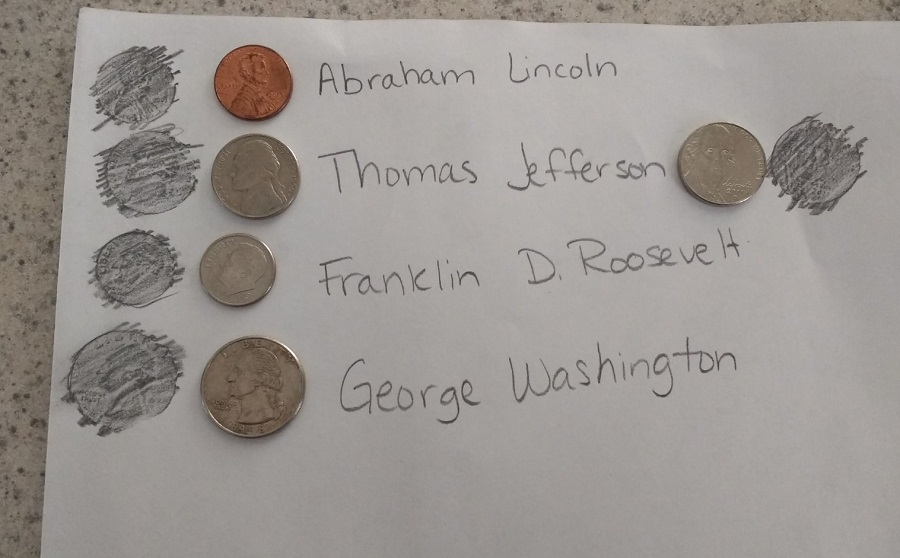
President Coin Rubbing

You can check out the fun President’s Day activity that promotes counting money and floating/sinking science on Hands On As We Grow here.
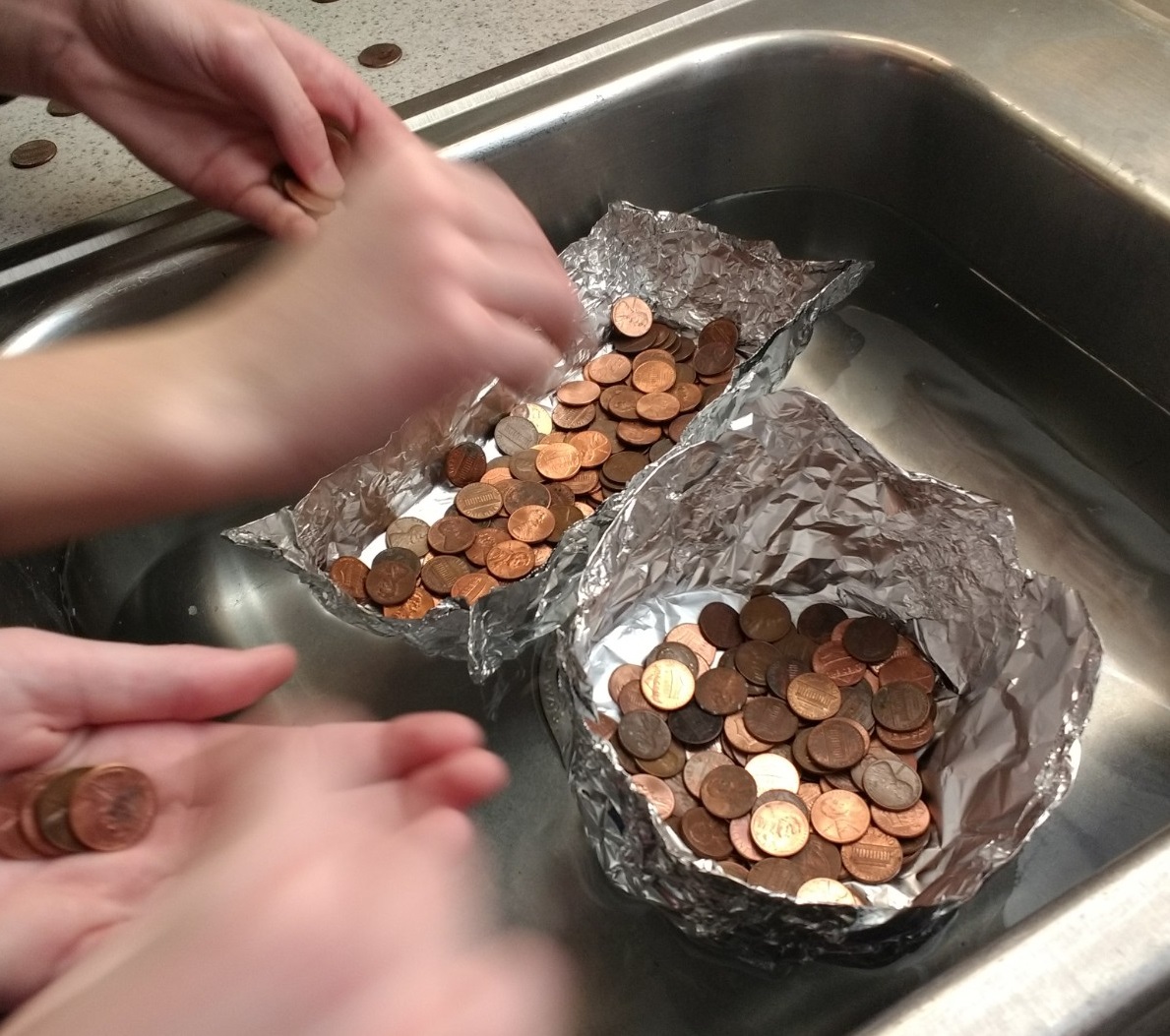
Sink and Float Counting Money President's Day Experiment

Below you will find a list of books (not listed in any particular order) that I compiled to go along with the easy tin foil boat money float or sink experiment (as it was called on Hands On As We Grow). These are all books I was able to check out from my library. I have included links along with the recommended ages (according to their descriptions on Amazon) for your convenience.

Books About Presidents

The President’s Day activity I did focused only on the presidents that were found on the penny, nickel, dime, and quarters. These books provide a little more explanation for presidents as a whole instead of focusing on specific ones.

President: A Presidential Primer by Joan Holub

Short rhyming poems and an additional sentence describe George Washington, John Adams, Thomas Jefferson, Abraham Lincoln, Ulysses S. Grant, Theodore Roosevelt, Franklin D. Roosevelt, John F. Kennedy, Ronald Reagan, and Barack Obama in this board book about presidents.

Recommended ages: 3-5 years

What is the President’s Job by Allison Singer

Brief explanation about presidents, voting, campaigning, elections, requirements to be a president, monuments built to honor presidents, the White House, Washington D.C., Congress, and presidential traditions are given throughout this level 2 reader book. It ends with asking if the reader would like to be a president and a quiz on things discussed in the book.

Recommended ages: 5-7 years

If I Were the President by Thomas Kingsley Troupe

Following the point of view of a young boy, this book talks about what he would do as a president, where he would live, what else he would be known as, and how the Secret Service agents would help him. It ends with a page explaining what the requirements of becoming a president are.

Recommended ages: 5-8 years

White House Winners: What You Don’t Know About the Presidents by L.J. Tracosas

A lot of words throughout this book explain the responsibilities of a president, three branches of the federal government, requirements to be president, and interesting facts about each of the 45 presidents. Did you know Abraham Lincoln is listed in the National Wrestling Hall of Fame?

Recommended ages: 6-8 years

Books About Abraham Lincoln (President on the Penny)

Look at a penny and a five-dollar bill. Whose face do you see? Abraham Lincoln’s face. Here are some books that focus on President Abraham Lincoln’s life and accomplishments.

I am Kind: A Little Book About Abraham Lincoln by Brad Meltzer

This board book starts off by asking the reader: “What kind of voice will you have?” It then mentions different voices a person may have, being kind, and speaking up for what is right.

Recommended ages: 2-5 years

I am Abraham Lincoln by Brad Meltzer

This book talks about how Abraham Lincoln loved to read, stood up for what was right, and knew how to write as a young child. As he grew older, he got in a fight against bullies, saw slaves, ran for president four times before being elected as president, and spoke against slavery.

Recommended ages: 5-8 years

What Lincoln Said by Sarah L. Thomson

This book follows the life of Abraham Lincoln as he earned his first dollar, studied law, became a lawyer, considered becoming president, won the presidential election, worked to keep the states together, and signed the Emancipation Proclamation.

Recommended ages: 6-9 years

My Itty Bitty Bio: Abraham Lincoln by Emma E. Haldy

Simple text discusses where Abraham Lincoln was born, how he learned, whom he married, his presidency, freeing slaves, and who killed him. Questions are provided throughout the book for the reader to answer.

Recommended ages: 4-6 years

My First Biography: Abraham Lincoln by Marion Dane Bauer

This book discusses where Abraham Lincoln was born, what his childhood was like, how he learned, running for president, the Civil War, Gettysburg Address, and slavery.

Recommended ages: 3-5 years

Meet Abraham Lincoln by Patricia A. Pingry

This book talks about Abraham Lincoln’s childhood, growing up, getting married, being elected as president, having children, issuing the Emancipation Proclamation, the Civil War, and being shot and killed. It ends with discussing Abraham Lincoln being remembered by having his face on the five-dollar bill and penny and having the Lincoln Memorial built.

Recommended ages: 4+ years

Books about Thomas Jefferson (President on the Nickel)

Whose face will you find on a nickel? President Thomas Jefferson. These books focus on President Thomas Jefferson’s life and accomplishments.

Thomas Jefferson Builds a Library by Barb Rosenstock

Thomas Jefferson read, read, and then read some more as soon as he learned to read. His love of books and reading continued as he grew older. He even “bought two thousand books in five years, more than a book a day.”  The books at the Library of Congress were destroyed in a fire during a war, so Thomas Jefferson donated over 6,500 books to start a new Library of Congress. Additional information and quotes are added throughout the pages.

Recommended ages: 8-12 years

First Peas to the Table by Susan Grigsby

This is the story of “how Thomas Jefferson inspired a school garden”. A class holds a garden contest and one girl really wants to win. She has a nickel (which has Thomas Jefferson on the front and his home, Monticello, on the back) as a good luck charm. The kids learn about the plant life cycle, growing plants, composting, taking notes, and a little bit about Thomas Jefferson throughout the story.

Recommended ages: 4-8 years

Thomas Jefferson Grows a Nation by Peggy Thomas

Thomas Jefferson insisted America was worth visiting and living in. He tried hard to combat the negative remarks of another man, Count Buffon, to prove this, which led to an interesting (yet disgusting) story about a dead moose being transported for nine months. The book continues with more information about Thomas Jefferson and the Louisiana Purchase. Quite a bit of text.

Recommended ages: 9-12 years

The True Story of the Quest for America’s Biggest Bones: Thomas Jefferson and the Mammoth Hunt by Carrie Clickard

This rhyming book talks about Thomas Jefferson’s debate with Count Buffon and Jefferson’s persistence to prove that America was great leading to a mammoth hunt. An author’s note and additional back matter give more explanation.

Recommended ages: 4-8 years

Books about Franklin Roosevelt (President on the Dimes)

He may be the president found on the dime, but President Franklin Roosevelt was very challenging to find in children’s books at my local library. Unfortunately, I was only able to find one on him.

Nice Work, Franklin! by Suzanne Tripp Jurmain

There is quite a bit of text in this book, so younger kids may not be interested in sitting through the entire reading. It begins by talking about how “lucky” President Franklin D. Roosevelt was. Then it discusses his polio and being confined in a wheelchair. Some people didn’t think someone in a wheelchair could be strong enough to hold a job in the government, but he didn’t let that stop him from running for positions in government. At his presidential inauguration, he took a stand (literally) with the help of his leg braces, cane, and son. Once in office, Roosevelt had people build “dams, highways, tunnels, parks, schools, and bridges” among other things. It ends with “Nice work, Franklin!”

Recommended ages: 5-9 years

Books about George Washington (President on the Quarters)

Who is on the quarter? President George Washington, of course! We celebrate President’s Day on the third Monday of February each year because George Washington’s birthday is February 22nd. He was born 288 years ago (in 1732). You can also find states on the back of some quarters, but many of those states became states after George Washington’s time.

I am George Washington by Brad Meltzer

This book discusses George Washington’s childhood, who had a big impact in George Washington’s life, his job as a surveyor, joining the military, running for office (and losing), the American Revolutionary War, being chosen as a leader, and being a leader.

Recommended ages: 5-8 years

George Washington: The First President by Sarah Albee

This Level 2 Reader discusses George Washington’s role when independence from Britain was declared by America, George Washington’s childhood, Mount Vernon, the French and British War, meeting and marrying Martha Custis, and becoming the first president of the United States.

Recommended ages: 4-8 years

Meet George Washington by Patricia A. Pingry

This book talks about George Washington’s childhood, growing up, becoming a surveyor, becoming a plantation owner, meeting and marrying Martha Custis, the French and British War, the crossing of the Delaware River, becoming president, his time after his presidency, Washington D.C., and the Washington Monument.

Recommended ages: 4+ years

Books about Money

Money may not necessarily tie in with President’s Day, but it does tie in with the activity I did for President’s Day on Hands On As We Grow. Below are some books about money you can read as you look at coins with the presidents’ faces on them.

I did not write a description of each of these, but I did provide (affiliate) links to find more information. I was able to find all of these books at my local library.

Just Saving My Money by Mercer Mayer

Recommended ages: 4-8 years

Money Doesn’t Grow on Trees by Jennifer Moore-Mallinos

Recommended ages: 5-6 years

I Can Count Money by Rebecca Wingard-Nelson

Recommended ages: 6-9 years

Money Madness by David A. Adler

Recommended ages: 4-8 years

M is for Money: An Economic Alphabet by Debbie and Michael Shoulders

Recommended ages: 8-11 years

Books about Floating and Sinking

Floating and sinking may not necessarily tie in with President’s Day, but it does tie in with the activity I did for President’s Day on Hands On As We Grow. Below are some books about floating and sinking you can read before or after trying the President’s Day activity I wrote about.

I did not write a description of each of these, but I did provide (affiliate) links to find more information. I was able to find all of these books at my local library.

Boats Float by Rebecca Glaser

Recommended ages: 1-3 years

Big Machines Float by Catherine Veitch

Recommended ages: 4-7 years

What Floats? What Sinks? A Look at Density by Jennifer Boothroyd

Recommended ages: 6-9 years

Curious George: The Boat Show by Raye Lankford

Recommended ages: 4-7 years

Things That Float and Things That Don’t by David A. Adler

Recommended ages: 4-8 years

What Floats in a Moat? by Lynne Berry

Recommended ages: 5-9 years

Will you read any of these books as you celebrate President’s Day?


For other themed books, check out:

14 Children’s Books About Teachers

8 Children’s Books About Community Helpers

25+ Books About Owls

10 Cookbooks for Kids