Crafts and Projects · Jobs of a Preschooler · Ramblings

Nature Walk: Whose Tracks Are These?

(This post contains affiliate links, which means I may make a small commission at no extra charge to you if you click on a link and make a purchase. As an Amazon Associate, I earn from qualifying purchases. I greatly appreciate all purchases you make using these links. Thank you!)

I had mentioned in a previous post that your little ones can be scientists by taking a nature walk to make some interesting discoveries.

Maybe your little ones would like to find some animal tracks in sandy, muddy, or snowy areas. Guidebooks that show animal tracks can be very beneficial to identify the animals that made the tracks.

My family has found many tracks over the years. Below are a few samples of animal tracks we have found.

These are tracks we found on an island in the middle of the Mississippi River. We knew they were bird tracks, but we weren’t sure what kind of bird.
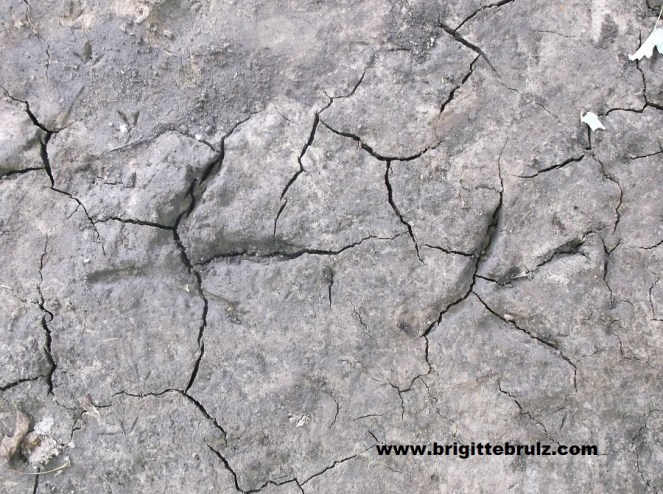
bird tracks

We looked at the guide found here (from USGS Education), and it appears as though they are heron tracks.

This is another picture I took on an island in the Mississippi River. The deer who left these tracks behind would have had to swim across the river to get to this island.

deer tracks in sand

We explored the small island for a little bit, but we never found any deer.

These were dog (or coyote) tracks found on the same island. It can be fun to make up stories to go along with discovered tracks. What kind of animal was it? What was it doing?
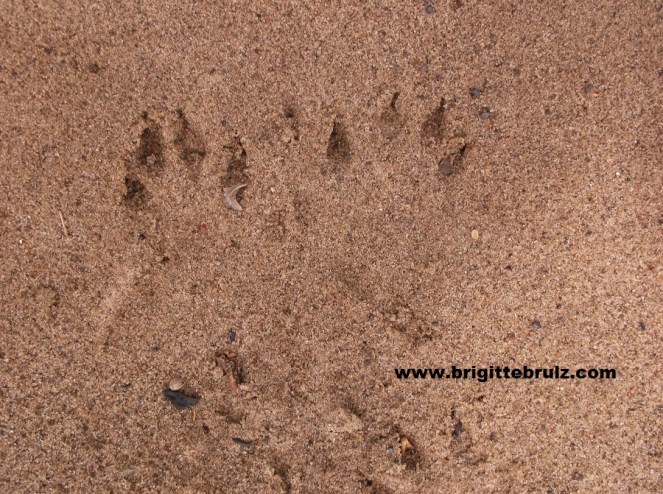
dog tracks in sand

We were guessing the tracks below were from a dog visiting with its family. That seemed like a nicer story than a coyote following the deer.

There are multiple tracks in this mud we found at a Wetlands Center we visited.

tracks in mud

Here is a large turtle track we saw while visiting MacArthur Beach State Park in Florida.
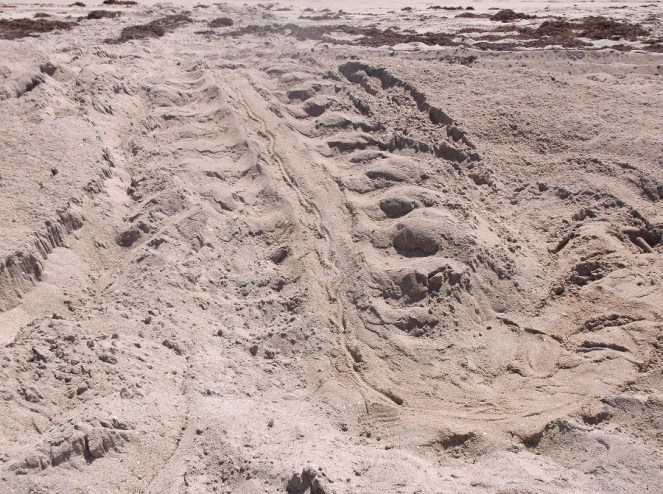
turtle tracks on beach

I’m glad we had decided to take a tour with a park ranger while there otherwise I’m not sure I would have recognized this as a turtle track. The park ranger was kind enough to point it out to us and tell us that it had been left by a turtle laying her eggs the night before.

We have enjoyed many field trips to nature centers and parks. On one visit, the naturalist showed us multiple animal track samples and allowed the kids to create their own animal track molds.

One of my daughters molded a Canadian goose print.
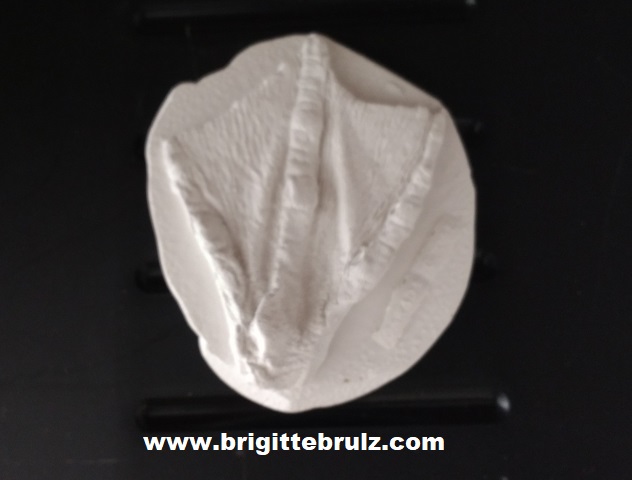
canadian goose track mold

My other daughter molded a wolf print.
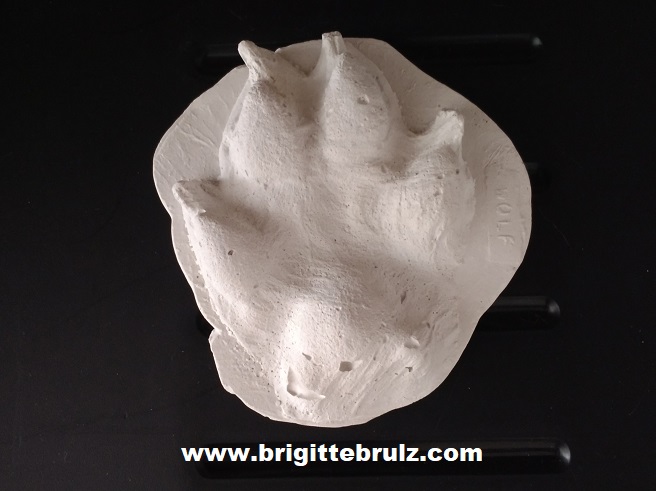
wolf track mold

We used rubber molds of animal tracks when we created these animal prints out of plaster of paris. If you are interested in making a mold of an animal print you find outside, you may want to read How to Make a Mold of Animal Tracks with Plaster of Paris on Frugal Fun 4 Boys or this booklet from USGS Education, which includes an animal track reference guide.

Searching for tracks may lead to a hungry kid. You could continue with the theme of tracks with these cute animal track snacks as seen on Loreen Leedy’s website.

It may be fun to discuss another animal track animals leave…scat! You may want to save this discussion for after snack time, though. A cute book to check out about animal tracks and their scat is called Track that Scat! by Lisa Morlock.

Track that Scat book

Will you find (or make) any tracks today?

Ramblings

Upcoming SCBWI Picture Book Conference

I learned quite a bit of information at the SCBWI Adventures in Nonfiction Conference I attended earlier this year, and I am excited to announce an upcoming conference. If you are interested in writing children’s books, you may enjoy the Grow Your Picture Book Garden conference that is now open for registration. Grow Your Picture Book Garden is a one day conference taking place on Saturday, August 11th in Des Moines, IA. If you register before June 30th, you get a discounted price. For more information about who is presenting, what children’s book topics will be covered, and how to register, visit the SCBWI event page here.

grow picture book conference

Will you be attending Grow Your Picture Book Garden or any other upcoming SCBWI conferences?

Ramblings · Writing Appearances

Celebrate Dinosaur Day!

There are so many interesting days to celebrate throughout the year. I have written about how I celebrated National Pickle Day, and I have offered a list of ideas to celebrate penguins for Penguin Awareness Day.

This May 15th is for the dinosaur lovers in your house because it is Dinosaur Day!

dinosaur fossils

I have created a list of 35+ dinosaur themed activities, crafts, snacks, books, and more for you to celebrate Dinosaur Day with your little ones. The list has been recently published on Hands On As We Grow, which you can check out here if interested.

Will you do anything to celebrate Dinosaur Day?

Years ago, my daughters painted the pieces to the dinosaur in the picture below. Once the paint dried, I hid all of the pieces in pillow stuffing for them to find. They became paleontologists searching for the “fossils” and then assembling the pieces.

wooden dinosaur

Have a roaring time celebrating Dinosaur Day!


Crafts and Projects · Jobs of a Preschooler · Ramblings

How To Make Glass Disappear

Last summer, my daughters and I enjoyed some programs at our local library as part of the library’s summer reading program.

At one science program we attended, a large clear glass aquarium was set on a table in the front of the room. The aquarium appeared to be filled only with a yellowish color liquid, which we later found out was vegetable oil. I was surprised when the presenter and a volunteer wearing gloves pulled numerous glass beakers, test tubes, and jars from the aquarium.

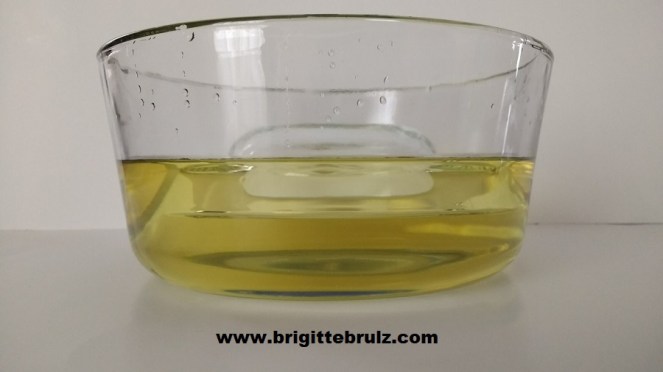
Apparently, Pyrex glass appears practically invisible inside other glass containers filled with vegetable oil. I had to try this at home!

My daughters and I gathered our vegetable oil and glass Pyrex bowls.

disappearing glass experiment

One of my daughters added the vegetable oil to the larger bowl.

disappearing glass experiment

Then, my other daughter filled oil in the smaller bowl. I can see why the presenter and his assistant were wearing gloves when they did this experiment!

disappearing glass experiment

Once filled, she placed it in the larger bowl.

Disappearing glass

After experimenting with the bowl facing up, we decided to flip the little bowl upside down and place it back into the large bowl. The top part of the bowl is visible where there is no vegetable oil, but the bottom part is not as easy to see.

disappearing glass experiment

It looks as though the little bowl has disappeared on the bottom of the large bowl. Just like magic!

disappearing glass

Maybe your little one would like to be a “magician” like the girl in the book Jobs of a Preschooler and try to make things disappear with this simple experiment!

Magician from Jobs of a Preschooler

What can (s)he make disappear?

You can check out these posts for more science fun.


Ramblings

SCBWI Adventures in Nonfiction Conference

(This post contains affiliate links, which means I may make a small commission at no extra charge to you if you click on a link and make a purchase. As an Amazon Associate, I earn from qualifying purchases. I greatly appreciate all purchases you make using these links. Thank you!)

I was really excited about attending the SCBWI Adventures in Nonfiction conference, and I am happy to say that I was not disappointed. I had a lot of fun and learned so much!

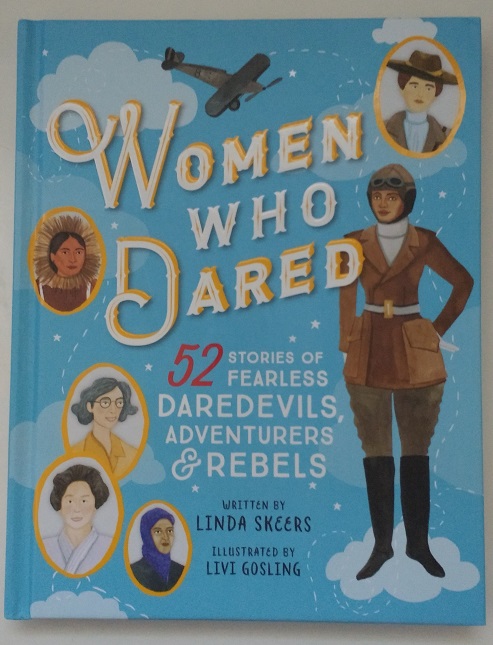
I came home with 14 pages of notes in a notebook, multiple worksheets (with even more of my handwritten notes), numerous ideas for nonfiction children’s books, and a personalized signed copy of Women Who Dared that I won as a door prize.

Women Who Dared is a beautiful book written by Linda Skeers about 52 not as well-known women in history who dared to dream big. I personally know Linda, and I was super excited to win this book as a door prize. My daughters read through this book and were inspired to research more about a couple of the women.

Women Who Dared Book

Anyways, some things we discussed at the conference include:

  • numerous nonfiction formats with lots of books as examples
  • ways to come up with ideas for a nonfiction book (did a fun exercise for this)
  • trends of nonfiction
  • job of an editor
  • effective submission strategies
  • work-for-hire information
  • visual appeal
  • word counts
  • sources to use/research information
  • when to follow-up with a submission
  • common mistakes in manuscripts
  • types of educational markets
  • advantages/disadvantages of working with educational markets
  • resources to look at to find more information
  • cover letters and resumes
  • writing for an existing series
  • writing for a specific grade level
  • picture book biographies
  • “through lines” (with another fun exercise)
  • matching voice of story with subject
  • openings

I am still trying to process all of the information, but I am excited to create some works of nonfiction using some of the information I learned. Nonfiction does not have to mean boring!

What is something you are trying to learn more about?


.