Ramblings

Recommended Book For Children’s Book Writers and Update

(This post contains affiliate links, which means I may make a small commission at no extra charge to you if you click on a link and make a purchase. As an Amazon Associate, I earn from qualifying purchases. I greatly appreciate all purchases you make using these links. Thank you!)

Summertime means not having to do school five days a week with my daughters, so I have had a little bit more time recently to work on some writing activities.

I had mentioned in a previous post that I read Making a Living Writing Books for Kids by Laura Purdie Salas which had a lot of useful information and ideas.

I am definitely not making much money on my writing adventure right now, but I have been slowly increasing my yearly profit since I first published Jobs of a Preschooler and Pickles, Pickles, I Like Pickles. Hopefully that will continue.

Of course the ideas that are in Making a Living Writing Books for Kids are only beneficial if they are actually put into practice. So, I got to work on some things after reading the book.

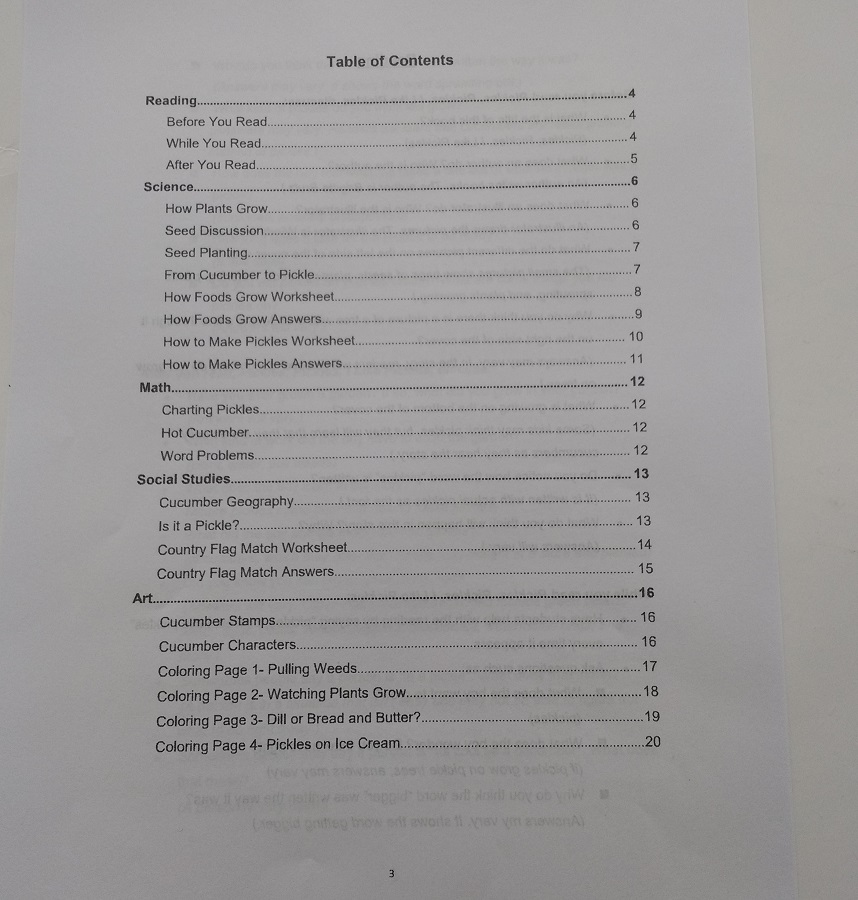
I created a 21 page Pickles, Pickles, I Like Pickles Teacher’s Guide.

Pickles, Pickles, I Like Pickles Teacher's Guide

I set up Google Alerts for some keywords including my name and the titles of my books. As a result, I may receive daily emails if there is anything written using the keywords I entered.

Interestingly, I haven’t received any alerts for my name or actual books even though my name was listed recently on Humble Mama Hustle because Pickles, Pickles, I Like Pickles was included in their 2019 Summer Reading List for Adults, Teens and Children.

With that being said, I have been receiving alerts for articles that include the word pickles, which has been rather entertaining. Who knew people liked pickles so much?

Chocolate covered pickles. Pickle cotton candy. A cat named Pickles. These are all things that have popped up with Google Alerts.

Laura Purdie Salas spends an entire section discussing mindset in Making a Living Writing Books for Kids. On page 27, she says, “It took several years and quite a few published books before I could answer, ‘I’m a writer,’ when people asked, ‘What do you do?’ Now, looking back, I wish I had owned it earlier.”

That is something I struggle with.

When I first started my writing adventure, I didn’t know if I wanted to write as a career or just write as a hobby. I am a homeschooling mom, and I don’t want my daughters’ education to be pushed to the side as a result of my writing journey. I want to make sure my priorities are in order, and I am still available when needed.

But I also knew I wanted to write. So, I started writing and learning about writing.

When it was time to file my taxes the first year of my writing adventure, I struggled with the question of “Is it a hobby or a business?”. In the end, I chose business because I do intend to continue writing, and I would like to gradually increase my income from writing (whether for magazines, books, courses, blog posts, etc.).

Now, I am a network chair for SCBWI. I have attended a few SCBWI writing conferences/webinars. My writings have been published in a few magazines and on other websites. I have published two children’s books (even if they are self-published). I have learned a lot about writing and publishing, and I can actually answer questions about writing and publishing when asked.

Yet, when someone asks me “what do you do”, I often state I am a homeschooling mom. I neglect to say I am an author or freelance writer, even though I continue to pursue writing.

So, what does Google say when I enter my name? It says I am an author!
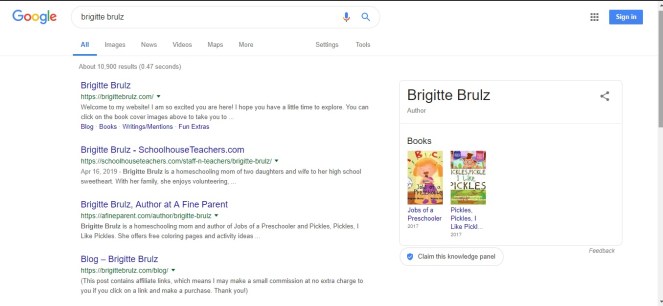
Brigitte Brulz screenshot

It says it on the internet, so it must be true, right? Just kidding! But all joking aside, maybe it is time I start  recognizing myself as an author (or writer).

With that in mind, I decided to update my email signature. Before, it simply stated my website address.

Now, it says:

Author| Freelance Writer| Lesson Designer| SCBWI Network Chair

www.brigittebrulz.com

Those are my writing journey titles. Of course, I have other titles as well- Christian, wife, homeschooling mom, Sunday school teacher, Sparks director, homeschool leader/field trip coordinator, daughter, granddaughter, etc.

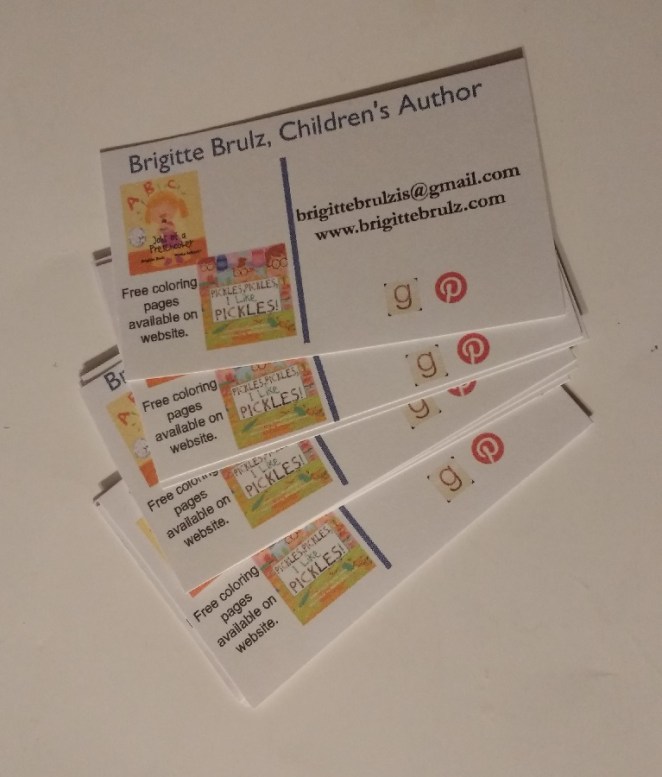
I also updated some business cards (something Laura Purdie Salas mentions on pages 126-127). Not sure who I’ll give them to just yet, but they are printed and in my purse.
Some things mentioned in the book that I have heard over and over again yet I have not taken the leap to complete just yet include creating an email list, joining Twitter, and doing school visits.

All three of these are things I keep thinking about, but I keep telling myself I will do them if (hopefully when) I get a traditionally published book deal. In the meantime, I have my reasons (really just excuses) to not do each of them.

Baby steps. I will get there eventually.

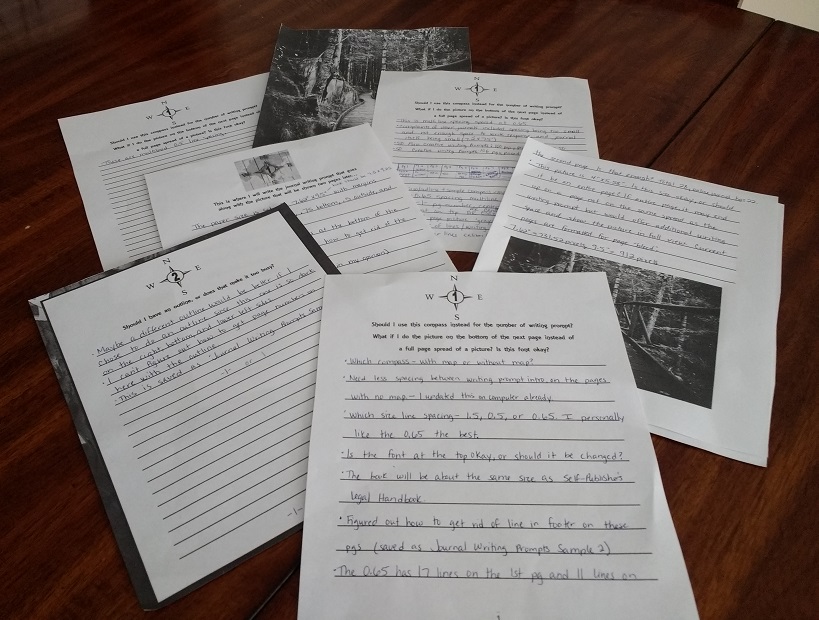
Of course, all of those things don’t matter if I don’t keep writing, so I have also been writing. I am still working on an adventure writing prompt journal I hope to have published later this year, which has been a really fun activity to work on with my daughters.
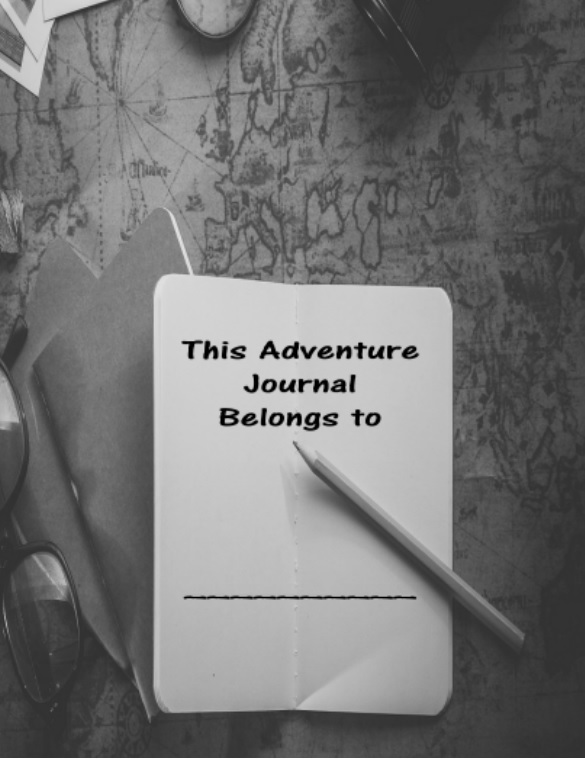
This Journal Belongs to...

I also created reading journals, which I hope to share more information about in the near future. I have them uploaded and ready to publish, but I am waiting on the proofs right now to make sure everything looks okay in person before I hit publish.

I have also submitted some queries to a magazine within the last couple of weeks and had three of them accepted, so I hope to work on those once I get the contracts for them. Magazines can schedule articles really far in advance, and these particular ones aren’t scheduled to be published until the fall of 2020 at the earliest and the winter of 2021 at the latest.

I submitted four children’s book manuscripts to various places seeking publication this year. So far, I have received a total of 16 rejections for them. Other places haven’t responded, and they may never respond if they aren’t interested.

Rejections (and no responses) are part of being a writer. Infact, Laura Purdie Salas stated she is “aiming for 200 rejections this year!” in her book. Of course, writers would like to have all of their writings accepted, but the simple fact is they won’t be. A large number of rejections means a large number of tries, and writings won’t go anywhere if the writer doesn’t at least try.

In the meantime, I continue working on other manuscripts.

Making a Living Writing Books for Children has a lot of other wonderful tidbits of information with stories from Laura Purdie Salas’s personal experience, which I loved. I have many sections throughout the book highlighted for future reference.

If you are interested in pursuing a career in writing books for children, I highly recommend Making a Living Writing Books for Children.

What books do you recommend?


Jobs of a Preschooler · Ramblings · Themed Books

Nature Walk: How Many Butterflies and Moths?

(This post contains affiliate links, which means I may make a small commission at no extra charge to you if you click on a link and make a purchase. As an Amazon Associate, I earn from qualifying purchases. I greatly appreciate all purchases you make using these links. Thank you!)

I had mentioned in a previous post that your little ones can be scientists by taking a nature walk to make some fun discoveries. I have talked about finding tracks, nests, and interesting creatures before. Today, I thought it would be fun to search for butterflies and moths.

Although I am definitely not a lepidopterist (a person who studies moths or butterflies), there are some books that provide details about moths and butterflies.

Books about Moths and Butterflies

Moth and Butterfly Search

Typically, moths have fat feathery antennae, and butterflies have slender antennae with “balls” at the tips. Butterflies are often found during the day, whereas moths often prefer nights. Butterflies make chrysalises, and moths make cocoons.

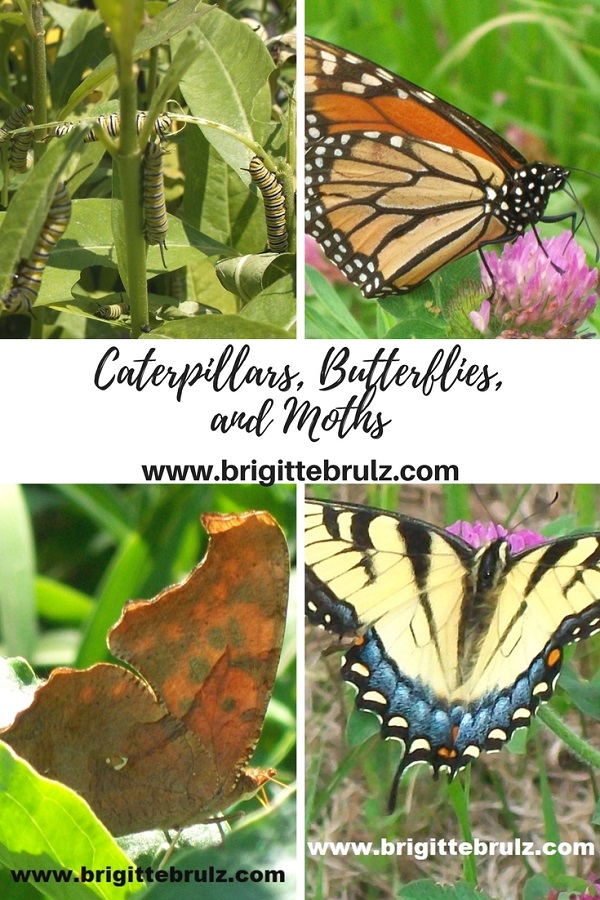
This is a picture of a monarch butterfly we found on a trail we were walking on one day. Did you know you can tell a male and female monarch butterfly apart by looking at the markings on the wings when they are open? The males have black spots, and the females don’t.

These caterpillars shown on the milkweed plants are not technically butterflies (yet), but it is fun to see the different stages of a butterfly. Did you know monarch caterpillars can only eat milkweed plants?

monarch caterpillars on milkweed

I took the caterpillar picture at a monarch butterfly event we attended. Families were allowed to take home a caterpillar to raise and later release.

The book How to Raise Monarch Butterflies by Carol Pasternak is a great resource if you would like to raise your own monarch butterflies.

Some nature centers allow visitors to help tag monarch butterflies. The small tags help track monarchs during their long migration. More information about monarch tagging can be found on Monarch Watch.

I think this is an eastern tiger swallowtail. We were walking and saw it along the side of a road.

If you know what this guy is, please let me know.

A moth, a beetle, and a fly all flew on to a tree…

butterfly, beetle, and fly

…and then I took a picture.

Speaking of butterflies and flies, another book to check out is I, Fly by Bridget Heos about a fly that feels underappreciated. He thinks butterflies get too much attention, so he attempts to enlighten a classroom full of kids about flies. Readers learn quite a few facts about flies through the fly’s humorous discussion.

How many butterflies and moths can you find on your next nature walk?

Here are some more posts you may be interested in reading:

Nature Walk: Whose Tracks Are These?

Nature Walk: Where Will You Find a Nest?

14 Children’s Books About Flowers

14 Children’s Books About Seeds, Plants, and Gardening

Themed Books · Writing Appearances

8 Children’s Books About Community Helpers

(This post contains affiliate links, which means I may make a small commission at no extra charge to you if you click on a link and make a purchase. As an Amazon Associate, I earn from qualifying purchases. I greatly appreciate all purchases you make using these links. Thank you!)

One of my 2019 writing goals included creating a course, which I was actually able to complete earlier this year. The Foods and Food Production Course I created was published on Schoolhouse Teachers at the end of March.

Foods and Food Production

And now, there is another course I created available on Schoolhouse Teachers. This one is entitled Who Are Community Helpers?

Who Are Community Helpers? is divided into ten lessons each focused on a different community helper. Those include:

  • Chef
  • Construction worker
  • Dentist
  • Doctor
  • Farmer
  • Firefighter
  • Mail carrier
  • Nurse
  • Police officer
  • Teacher

Each individual community helper lesson is divided into sections:

  • Introduction Questions
  • Bible
  • Books to Read
  • Social Studies/History/Geography
  • Math
  • Science/Health
  • Writing
  • Art/Snack/Activities
  • Closing Questions

Who Are Community Helpers? and Foods and Food Production are available to members of SchoolhouseTeachers.com, which offers over 400 courses for preschoolers through high schoolers, as well as additional resources for adults.  My daughters and I have enjoyed multiple courses, videos, and resources from SchoolhouseTeachers.com, and we are looking forward to taking advantage of more of the courses in the upcoming school year (and this summer).

If you would like more information about SchoolhouseTeachers.com, click here.

If you are not a member of SchoolhouseTeachers.com (and have no interest in becoming one), then maybe the following 8 books about community helpers will be helpful if you decide to talk about community helpers with the little ones in your life.

Books About Community Helpers

Helpers in my Community by Bobbie Kalman

This book talks about what a community is, who community helpers are, what communities need, and who helps to fill those needs. It discusses builders, electricians, plumbers, teachers, librarians, crossing guards, school-bus drivers, nurses, principals, caretakers, medical helpers, dentists, paramedics, fire fighters, police officers, and volunteers.

Jobs of a Preschooler by Brigitte Brulz

Yes, this is the book I wrote and published, but I figured it fits in with community helpers. Jobs of a Preschooler has only one sentence per page and rhyming text. Free coloring pages to go along with the book are available here.

The summary of Jobs of a Preschooler states: “There are many jobs a parent may do throughout his or her day. A parent may be a chef (someone has to make the meals to eat), a teacher (learning doesn’t happen only at school), and a driver (for all those places where walking would take way too long). But parents aren’t the only ones with these jobs – preschoolers may do them, too! Join a busy preschooler as she experiences many jobs throughout her day. Is it work, or is it play?”

Show Me Community Helpers by Clint Edwards

This book includes police officers, firefighters, emergency medical technicians, doctors, nurses, pharmacists, dentists and hygienists, veterinarians, teachers, librarians, school bus drivers, cafeteria workers, construction workers, and electric utility workers. Each community helper section offers vocabulary words that go along with that community helper. For example, the police officer section talks about what police officers do and defines a fingerprint, crime, jail, holster, police car, siren, flashlight, two-way radio, badge, and handcuffs.

Whose Coat is This? by Laura Purdie Salas

Throughout the book, the reader is asked whose coat is being shown closeup with a one line description. The answer is then found on the next page along with more of a description of how the coat is just right for the job it is used for. The “coats” shown in this book include an artist’s smock, judge’s robe, soldier’s jacket, mail carrier’s coat, ski patroller’s jacket, doctor’s lab coat, firefighter’s coat, and your coat. The end includes a quick quiz to see what you have learned about three of the coats.

Whose Gloves are These? by Laura Purdie Salas

Throughout the book, the reader is asked whose gloves are being shown closeup with a one line description. The answer is then found on the next page along with more of a description of how the gloves are just right for the job they are used for. The gloves shown include a zookeeper’s glove, baseball player’s glove, dentist’s glove, mountain guide’s glove, gardener’s glove, welder’s gloves, housekeeper’s glove, and your winter mittens. The end includes a quick quiz to see what you have learned about three of the gloves.

Whose Hat Is This? by Sharon Katz Cooper

Throughout the book, the reader is asked whose hat is being shown closeup with a one line description. The answer is then found on the next page along with more of a description of how the hat is just right for the job it is used for. The hats shown include a firefighter’s helmet, beekeeper’s hat, chef’s hat, police officer’s cap, football player’s helmet, astronaut’s helmet, construction worker’s hard hat, and your hat. The end includes a quick quiz to see what you have learned about three of the hats.

Whose Shoes Are These? by Laura Purdie Salas

Throughout the book, the reader is asked whose shoes are being shown closeup with a one line description. The answer is then found on the next page along with more of a description of how the shoes are just right for the job they are used for. The shoes shown include underwater photographer’s flippers, park ranger’s field boots, athlete’s basketball shoes, construction worker’s steel-toed boots, ballerina’s pointe shoes, fisherman’s knee-high rubber boots, astronaut’s space boots, and your sneakers. The end includes a quick quiz to see what you have learned about three of the shoes.

Who Will I Be? by Abby Huntsman

The teacher in Isabel’s class asks what the students want to be when they are older, but Isabel doesn’t know. Her dad has her think about what makes her happy. She enjoys helping others but doesn’t think there is a job for a helper, so her dad shows her some of the helpers in her community: a teacher, crossing guard, veterinarian, someone in the military, policeman, librarian, activist, gardener, garbage man, pastor, journalist, fireman, and mayor (her mother). She still doesn’t know specifically which job she wants to have when she grows up, but she decides she does want to be a helper.

Do you have a recommendation for any other book about community helpers?

For more themed books, check out:

Ramblings · Themed Books

55 Children’s Books About Dads

(This post contains affiliate links, which means I may make a small commission at no extra charge to you if you click on a link and make a purchase. As an Amazon Associate, I earn from qualifying purchases. I greatly appreciate all purchases you make using these links. Thank you!)

Father’s Day is already less than two weeks away!

If you are looking for a fun gift or card for kids to make this Father’s Day, you can check out 15 DIY Father’s Day gifts and cards that I compiled for Hands On As We Grow.

If you are looking for children’s books about dads, then keep reading! With so many options to choose from (a total of 55), I hope you are able to find at least one that fits your needs.

Many of these books are available at my library according to the online library catalog; however, I did not check them all out and preview them ahead of time like I have done in the past.

55 Children's Books About Dads

Children’s Books About Dads

Always Daddy’s Princess by Karen Kingsbury

Ask Me by Bernard Waber

Baby Dance by Ann Taylor 

Because I’m Your Dad by Ahmet Zappa

Because Your Daddy Loves You by Andrew Clements

Dad and the Dinosaur by Gennifer Choldenko 

Dad By My Side by Soosh 

Dad Can do Anything by Martin Thomas 


Daddy Hug by Tim Warnes

Daddy Hugs by Nancy Tafuri 

Daddy Hugs 1-2-3 by Karen Katz

Daddy’s Girl by Helen Foster James

Daddy is a Cozy Hug by Rhonda Gowler Greene

Dad’s Book of Awesome Science Experiments: From Boiling Ice and Exploding Soap to Erupting Volcanoes and Launching Rockets, 30 Inventive Experiments to Excite the Whole Family by Mike Adamick

Days With Dad by Nari Hong

Faster! Faster! by Leslie Patricelli 

God Made Daddy Special by Glenys Nellist 

Hero Dad by Melinda Hardin

Higher! Higher! by Leslie Patricelli 

How to Surprise a Dad by Jean Reagan

If I Didn’t Have You by Alan Katz

I Love Dad by Joanna Walsh & Judi Abbot

I Love Dad With the Very Hungry Caterpillar by Eric Carle


I Love My Daddy by Giles Andreae 

I Love My Daddy Because…by Laurel Porter-Gaylord

I Love Pop!: A Celebration of Dads by Dr. Seuss

I Love You Daddy by Jilliam Harker


I Need All of It by Petra Postert 

Jabari Jumps by Gaia Cornwall

Just Like Daddy by Ovi Nedelcu

Just Me and My Dad by Mercer Mayer 

Lola Loves Stories by Anna McQuinn 

Maker Dad: Lunch Box Guitars, Antigravity Jars, and 22 Other Incredibly Cool Father-Daughter DIY Projects by Mark Frauenfelder

Me and My Dad! by Alison Ritchie 

My Cat Looks Like My Dad by Thao Lam

My Dad and Me by Alyssa Satin Capucilli

My Dad and Me by Tania Cox


My Dad is Amazing! by Sabrina Moyle

My Dad is Big and Strong, But…A Bedtime Story by Coralie Saudo 


My Father Knows the Names of Things by Jane Yolen

Naptastrophe! by Jarrett J. Krosoczka 


Nelly Gnu and Daddy Too by Anna Dewdney 

Night Job by Karen Hesse


Pet Dad by Elanna Allen

Shopping with Dad by Matt Harvey 

Thank You, God, for Daddy by Amy Parker 

The Berenstain Bears and the Papa’s Day Surprise by Stan and Jan Berenstain

The Night Before Father’s Day by Natasha Wing

The 10 Best Things About My Dad by Christine Loomis


Things To Do With Dad by Sam Zuppardi 

What Dads Can’t Do by Douglas Wood

When Dads Don’t Grow Up by Marjorie Blain Parker 

Why I Love My Daddy by Daniel Howarth

You and Me, Me and You by Miguel Tanco 

Your Baby’s First Word Will Be Dada by Jimmy Fallon

What is your favorite book about a dad?

Check out even more themed books:

Uncategorized

Pickles, Pickles, I Like Pickles Teacher’s Guide Now Available

(This post contains affiliate links, which means I may make a small commission at no extra charge to you if you click on a link and make a purchase. As an Amazon Associate, I earn from qualifying purchases. I greatly appreciate all purchases you make using these links. Thank you!)

Recently, I gave a behind-the-scenes peak at a project I am working on. It’s an adventurous writing prompt journal for kids I hope to create and publish within the next few months.

Unfortunately, I haven’t done much work with it since writing the behind-the-scenes peak post, but I hope to get back to work on it again soon.

In the meantime, I did attend my SCBWI monthly writer meeting, wrote about 5 interactive educational children’s books, wrote my monthly post for Hands On As We Grow, compiled a list of 55 books about dads for Father’s Day (which will be published next week), wrote and submitted 3 short poems to a children’s magazine, revised a manuscript which I had critiqued at my writer meeting, revised that manuscript again and submitted it to a few literary agents, and researched a couple of publishers and submitted a different manuscript to them.

I also read Making a Living Writing Books for Kids by Laura Purdie Salas, which I highly recommend for anyone interested in “earning a livable income through writing, editing, and speaking about writing and books” (as stated in the book). I ended up highlighting quite a bit of text within the book to refer back to later.

I really haven’t made much money on my writing adventure yet, but I hope to gradually increase my income as I continue my writing journey. After reading Making a Living Writing Books for Kids, I decided to implement a few ideas right away. I hope to share more about some of those ideas in a future post, but the one that I wanted to share with you today is a teacher’s guide I created for Pickles, Pickles, I Like Pickles.

In Making a Living Writing Books for Kids, Laura Purdie Salas mentions creating teacher’s guides for other people’s books to make some money. Although it won’t bring in any additional money for me, I thought it would be fun to create a teacher’s guide for Pickles, Pickles, I Like Pickles. So, I did.

The teacher’s guide is 21 pages long and offers activities for reading, science, math, social studies, and art that correspond with the book Pickles, Pickles, I Like Pickles.

Pickles, Pickles, I Like Pickles Teacher's Guide

It also includes the How to Make Pickles cut and paste activity with an answer key and all four coloring pages.

Pickles, Pickles, I Like Pickles Free Coloring Pages Available!

I wish I would have created the teacher’s guide before Pickles, Pickles, I Like Pickles was chosen for the 2019 Read Across Connecticut program, so it could have been used in the classrooms at that time. But, I didn’t have it done then. I hope there are others who are able to get some use from it in classrooms and at home now that it is available.

You are welcome to print a free copy of the Pickles, Pickles, I Like Pickles Teacher’s Guide. It is also available on the Fun Extras page along with some other activity ideas to do along with Pickles, Pickles, I Like Pickles. 

If you do print a copy of the teacher’s guide, please let me know your thoughts about it and if you have any suggestions for improvements.

Who knows…maybe I will create teacher’s guides for other author’s books in the future if anyone is interested.

Do you think having teacher’s guides for children’s books are beneficial?