Jobs of a Preschooler · Ramblings · Writing Appearances

Science Experiments to Try at Home

(This post contains affiliate links, which means I may make a small commission at no extra charge to you if you click on a link and make a purchase. As an Amazon Associate, I earn from qualifying purchases. I greatly appreciate all purchases you make using these links. Thank you!)

My daughters and I have done a lot of science experiments together over the years. Science can be a lot of fun – even if I don’t understand all of it!

I am definitely not an expert scientist, but that hasn’t stopped me from teaching science to my daughters. Who says I can’t learn with them? We’ll see if that changes as they get older and science lessons becomes more advanced, though.

To encourage science exploration, my daughters have a “science bin” that includes safety glasses, goggles, a small net, journal, bird guide book, experiment supplies, magnifying glasses, binoculars, and more. Their rock kit, skeleton model, human body model, and various other science kits are stored near their science bin. They also have numerous science type books throughout the house.

Science Fun Basket

Even though we are done with our school year for the summer, my daughters and I continue working on some science lessons together. One wall in my house displays some of our recent studies of human anatomy and physiology, which we have been studying using Apologia Human Anatomy and Physiology.

The large body poster is from a Magic School Bus kit. The skeleton replica is from The Giant Science Resource Book, which is a resource book I have used over and over again with my daughters for various science lessons. It was definitely worth the $2 I paid for it at a rummage sale! I use painter’s tape when I hang the items so the paint (hopefully) doesn’t peel when the items are removed from the walls.
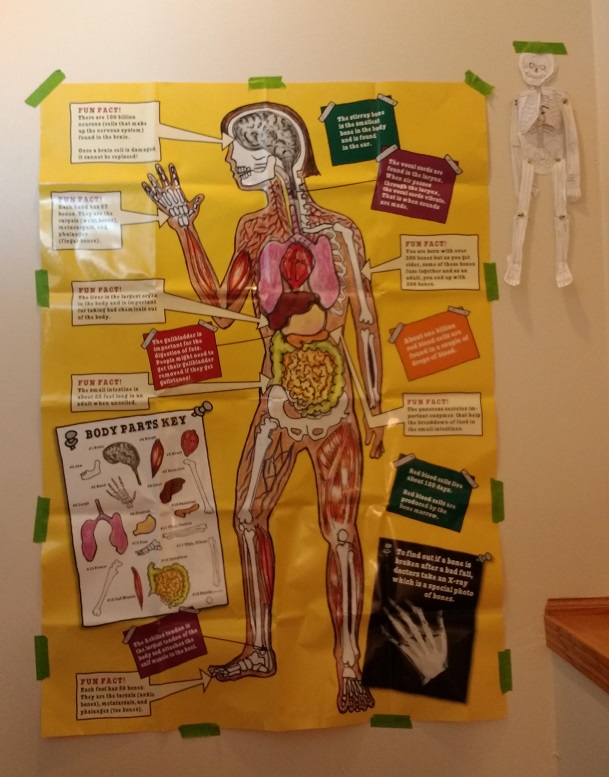
magic school bus human body poster

My daughters have enjoyed science so much, one of my daughters even decided to have a science themed birthday party one year. (I have really enjoyed throwing inexpensive, yet entertaining themed birthday parties for my daughters!)

During the science themed birthday party, my living room became a science museum, and all of the guests became scientists. We had a lot of fun performing experiments (in my kitchen), exploring the hands-on science museum (my living room), and enjoying a cake decorated as a cell.

Each of the kids went home with goggles, a test tube filled with candy, a homemade scientist ID badge, and their own scientist shirts I had purchased from The Dollar Tree (only $1 each) and decorated ahead of time.

I saw the idea for this shirt somewhere online years ago, although I can’t remember where I had seen it.
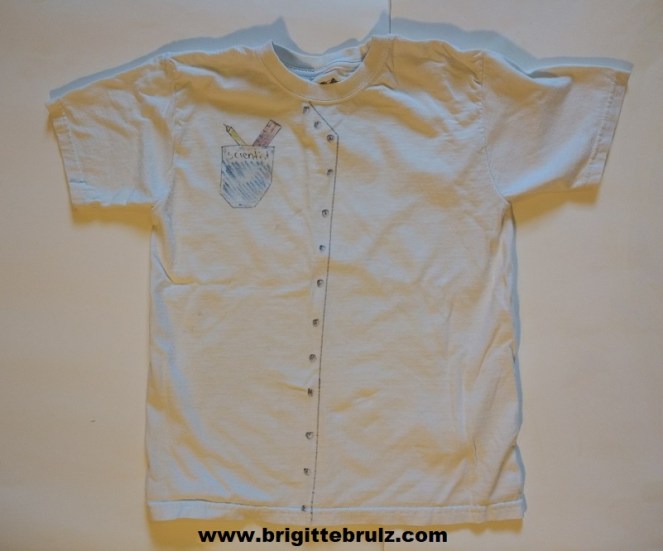
science t-shirt

Another result of our love for science experiments is the number of science kits we have accumulated over the years as gifts from family.

We have enjoyed each of the science kits we have received; however, we would not have nearly as many science kits if they weren’t given as gifts. Some of the kits can be rather pricey especially since most of them still require extra supplies not included to complete the experiments.

For that reason, I have compiled a list of 50 simple science experiments that use basic household supplies, which was recently posted on Hands On As We Grow. No science kit required!

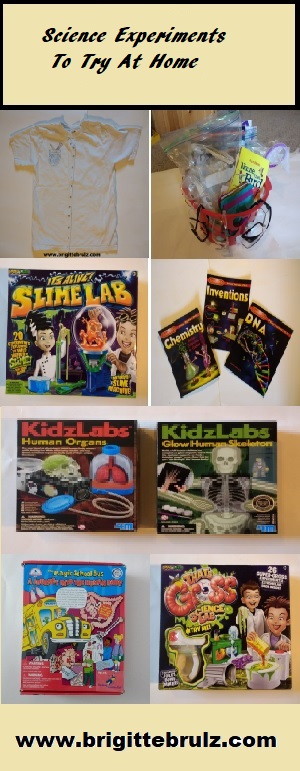
Some of the science kits my daughters currently own and have used are shown below incase you are interested.

Smart Lab: It’s Alive Slime Lab

This one requires batteries and other ingredients that are not included in the kit.

It's Alive Slime Lab science

Smart Lab: That’s Gross Science Lab

I recommend putting a bag around the top part of the toilet in this kit to protect the button from all of the messiness. Again, additional materials are needed to do the experiments in this kit.

That Gross Science Lab

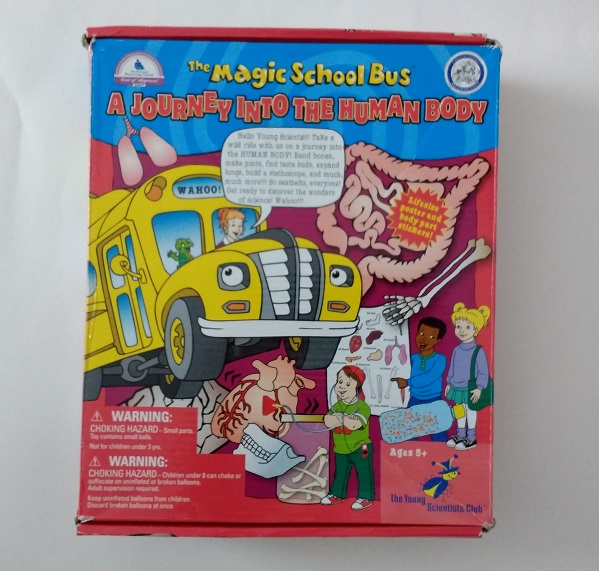
Magic School Bus: A Journey Into the Human Body

This is the kit the poster on our wall came from. My daughters placed the organ stickers that came with the kit on the human body poster as we discussed them.

We ended up with a horrible stench when we attempted Tim’s Experiment #1 described within this kit. Maybe if we had cleaned the chicken bones (not included) better, the stench wouldn’t have been as bad.
Magic School Bus science kit

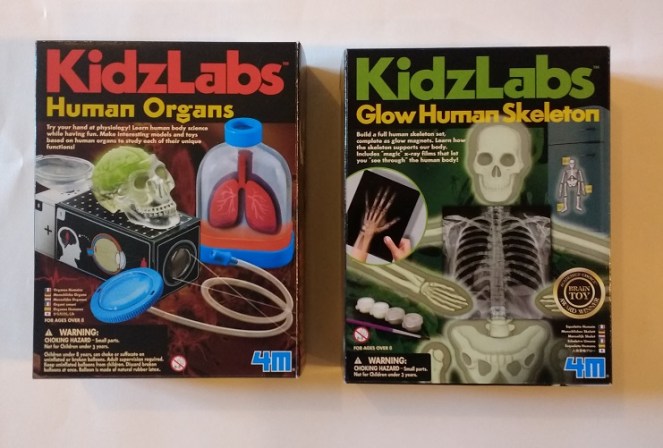
KidzLabs Human Organs and KidzLabs Glow Human Skeleton

You could try to make a fake lung as seen on Science Sparks if you are interested in demonstrating how lungs work and don’t want to spend the money on the human organs kit.

The magnets included in our human skeleton kit were not strong enough to hold up the bones we created with the kit, but it was still fun to build a human skeleton.
KidzLabs science

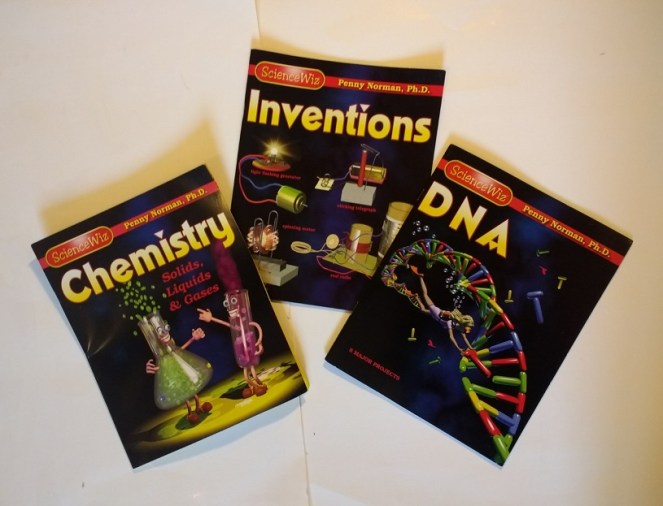
Science Wiz Chemistry and Science Wiz Inventions and Science Wiz DNA

This picture only shows the books that came with the kits, but there are other materials within each kit. The DNA kit was my favorite of these three!
Science Wiz kits

In order to complete each of the science kits my daughters receive, we intentionally schedule our own at-home “science days”. Before the science days, I prepare by reading through the supply lists and gathering all of the needed supplies.

Making mistakes and having experiment failures are part of being a scientist, right? In that case, I’m a great scientist! Experiments definitely don’t always go as planned.

Do you enjoy doing science experiments? Have you had any science experiment mishaps? I would love to hear from you!

Jobs of a Preschooler- I'm a scientist...

“I’m a scientist experimenting…”


Jobs of a Preschooler · Ramblings

Nature Walk: What Interesting Creatures Will Your Scientist Find?

(This post contains affiliate links, which means I may make a small commission at no extra charge to you if you click on a link and make a purchase. As an Amazon Associate, I earn from qualifying purchases. I greatly appreciate all purchases you make using these links. Thank you!)

I had mentioned in a previous post that your little ones can become scientists by taking a nature walk to make some interesting discoveries.

Some specific findings I have written about in past posts include animal tracks and nests. Today, I have decided to show you some interesting creatures my daughters and I have discovered. I hope these posts encourage you to explore the world around you. I would love to hear about what you are able to find while out and about!

Last year, my daughters were chasing each other around in our yard when one of my daughters noticed the grass had eyes.

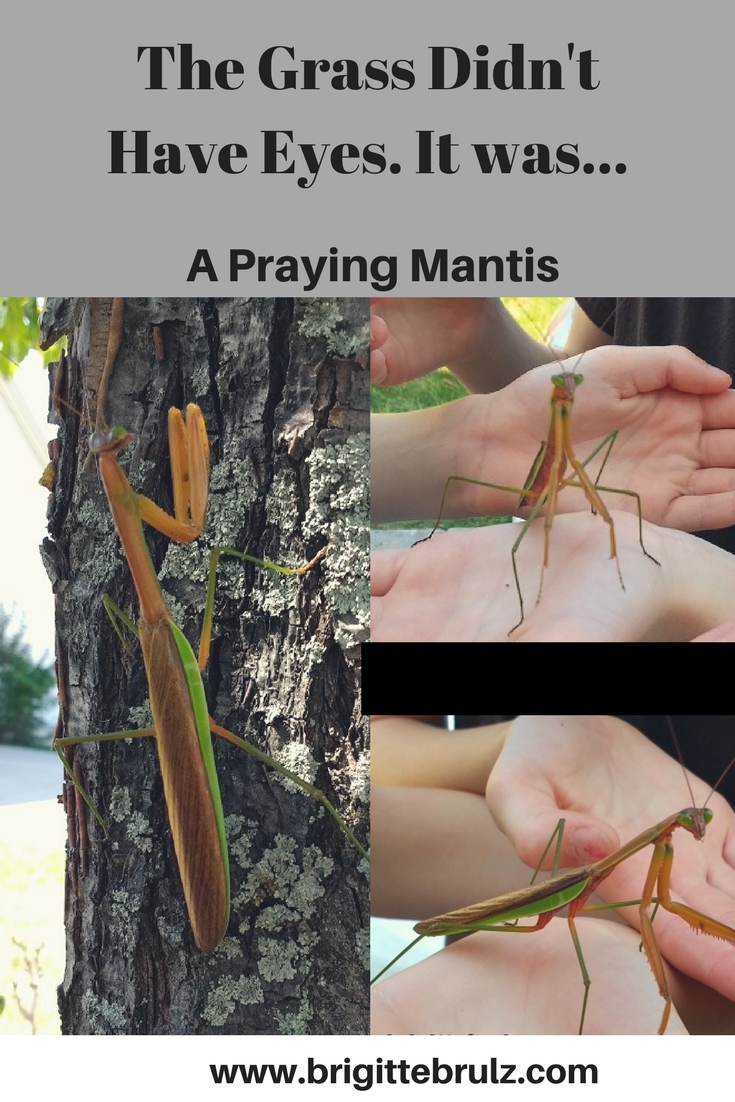
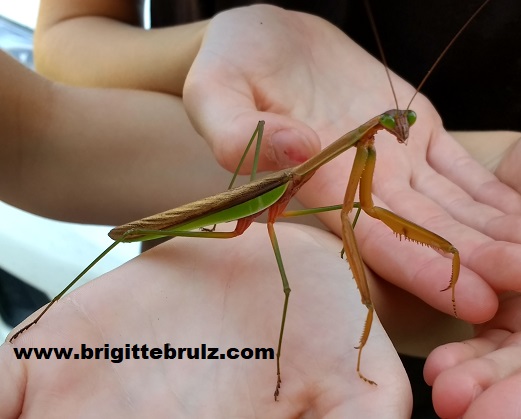
Ok, so the grass didn’t really have eyes. My daughter had actually seen the top part of this praying mantis.

Praying mantis

Isn’t the praying mantis such an intriguing insect? I have seen kits to raise praying mantises, which I think would be a really interesting science lesson. A praying mantis egg case can contain over 100 tiny praying mantises at one time! I’m not sure I’m up to the challenge of containing that many little creatures.

My family has raised caterpillars (using the Insect Lore Butterfly Kit) and tadpoles, but we probably won’t be raising any praying mantises in our house any time soon.

Did you know the babies may actually eat each other? What a way to be welcomed into the world!

praying mantis

My daughters moved the praying mantis to a nearby tree so they could continue running around in the yard without accidentally stepping on it.

praying mantis

The noise of cicadas can be deafening near our house in the summer. They are out and want everyone to know it! We have found quite a few cicada exoskeletons attached to trees since they molt as they grow. My daughters found this noisy little fellow in a tree in our yard. They caught him and released him back in a tree.

cicada

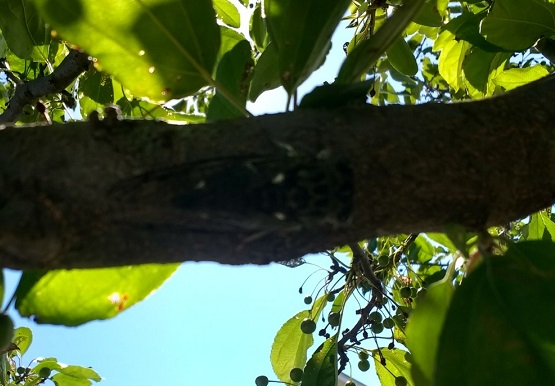
Here is another noisy cicada we found in a tree by following his noises. Can you find him on the tree branch? Talk about camouflage!

cicada on tree

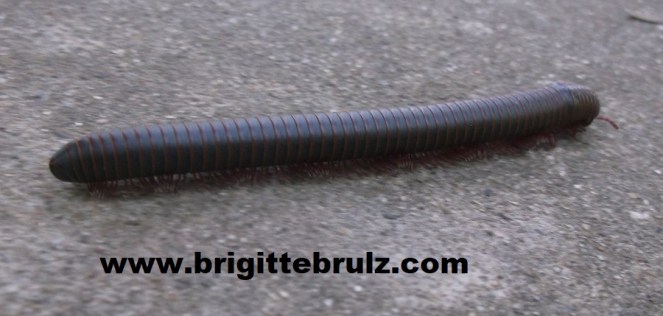
A few years ago, we were walking on a trail at a state park when we found this large millipede crossing in front of us. I have to admit, I didn’t know there were millipedes this big in Iowa until we found it. He was at least five inches long!

millipede

This guy was fun to watch and take pictures of, but we did not touch it. Look at all of those legs!

We were on a trail at another state park when we found this walking stick on one of the signs. He wasn’t as camouflaged on the sign as he would have been in the trees, which made me wonder how many of these guys we walk past unnoticed.

walking stick

What interesting creatures will you find and learn more about?

Check out these posts for more nature walk fun.

Crafts and Projects · Jobs of a Preschooler · Ramblings

Nature Walk: Whose Tracks Are These?

(This post contains affiliate links, which means I may make a small commission at no extra charge to you if you click on a link and make a purchase. As an Amazon Associate, I earn from qualifying purchases. I greatly appreciate all purchases you make using these links. Thank you!)

I had mentioned in a previous post that your little ones can be scientists by taking a nature walk to make some interesting discoveries.

Maybe your little ones would like to find some animal tracks in sandy, muddy, or snowy areas. Guidebooks that show animal tracks can be very beneficial to identify the animals that made the tracks.

My family has found many tracks over the years. Below are a few samples of animal tracks we have found.

These are tracks we found on an island in the middle of the Mississippi River. We knew they were bird tracks, but we weren’t sure what kind of bird.

bird tracks

We looked at the guide found here (from USGS Education), and it appears as though they are heron tracks.

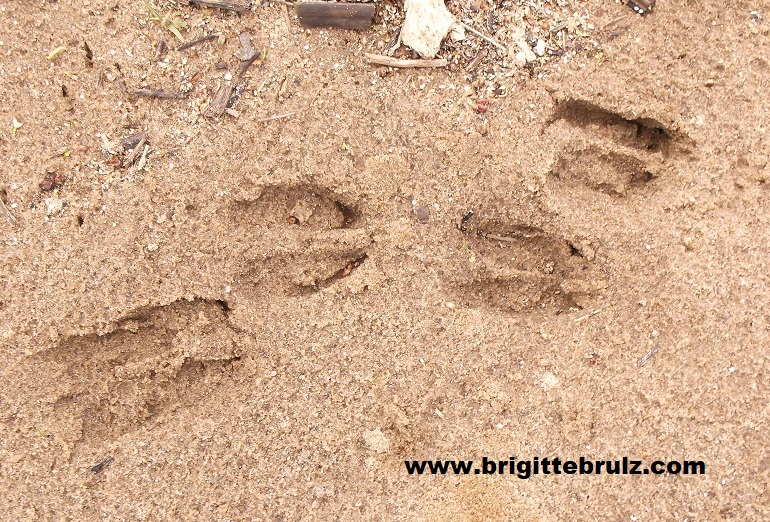
This is another picture I took on an island in the Mississippi River. The deer who left these tracks behind would have had to swim across the river to get to this island.

deer tracks in sand

We explored the small island for a little bit, but we never found any deer.

These were dog (or coyote) tracks found on the same island. It can be fun to make up stories to go along with discovered tracks. What kind of animal was it? What was it doing?

dog tracks in sand

We were guessing the tracks below were from a dog visiting with its family. That seemed like a nicer story than a coyote following the deer.

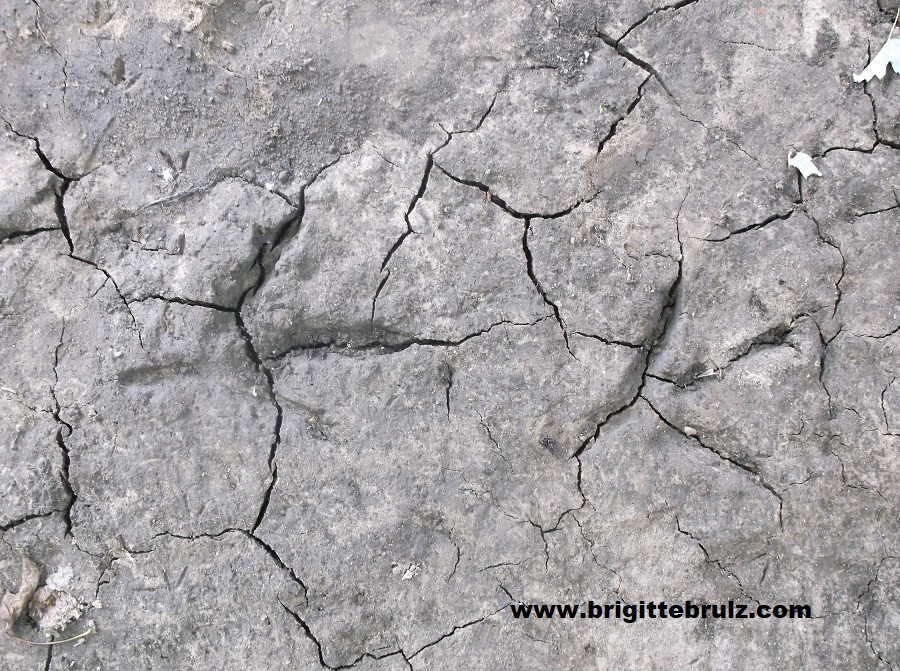
There are multiple tracks in this mud we found at a Wetlands Center we visited.

tracks in mud

Here is a large turtle track we saw while visiting MacArthur Beach State Park in Florida.

turtle tracks on beach

I’m glad we had decided to take a tour with a park ranger while there otherwise I’m not sure I would have recognized this as a turtle track. The park ranger was kind enough to point it out to us and tell us that it had been left by a turtle laying her eggs the night before.

We have enjoyed many field trips to nature centers and parks. On one visit, the naturalist showed us multiple animal track samples and allowed the kids to create their own animal track molds.

One of my daughters molded a Canadian goose print.

canadian goose track mold

My other daughter molded a wolf print.

wolf track mold

We used rubber molds of animal tracks when we created these animal prints out of plaster of paris. If you are interested in making a mold of an animal print you find outside, you may want to read How to Make a Mold of Animal Tracks with Plaster of Paris on Frugal Fun 4 Boys or this booklet from USGS Education, which includes an animal track reference guide.

Searching for tracks may lead to a hungry kid. You could continue with the theme of tracks with these cute animal track snacks as seen on Loreen Leedy’s website.

It may be fun to discuss another animal track animals leave…scat! You may want to save this discussion for after snack time, though. A cute book to check out about animal tracks and their scat is called Track that Scat! by Lisa Morlock.

Track that Scat book

Will you find (or make) any tracks today?

Birthday Party · Crafts and Projects · Jobs of a Preschooler

Build “Sand” Castles Inside Using Brown Sugar

I have enjoyed planning numerous themed birthday parties for my daughters over the years. One of my daughters decided she wanted an underwater themed birthday party a few years ago, which I had a lot of fun planning, decorating, and hosting with her.

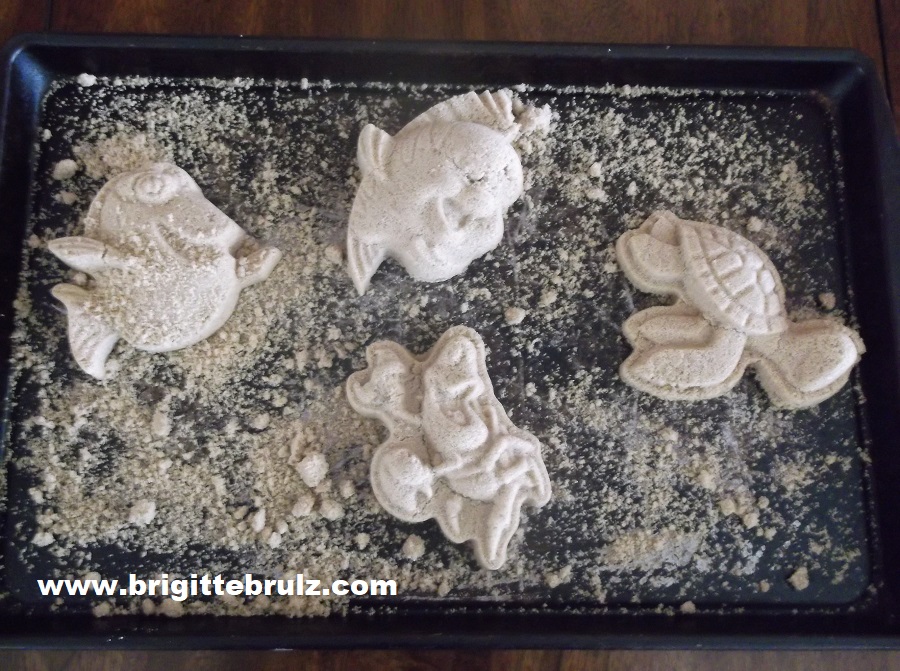
I wanted to incorporate something like sand castles as decoration at the under water themed party, but I didn’t want sand brought into my house. It occurred to me one day as we were baking that brown sugar packs well and looks like sand.  Brown sugar is also inexpensive and edible, so I decided to create a few brown sugar animals as decoration on one of the tables for her party.

Brown sugar instead of sand

I thought they looked cute. My daughters have since had fun making their own brown sugar castles and creations, which I wrote a post about on Hands On As We Grow. You can read it here if you would like. (I wrote the post in March when we still had snow on the ground, and it was bitterly cold. This week, it has been in the 90s all week, so I found it funny the post says “It’s still too cold where I live to build sand castles at the beach.” It’s amazing how much the weather can differ from month to month in some locations!)

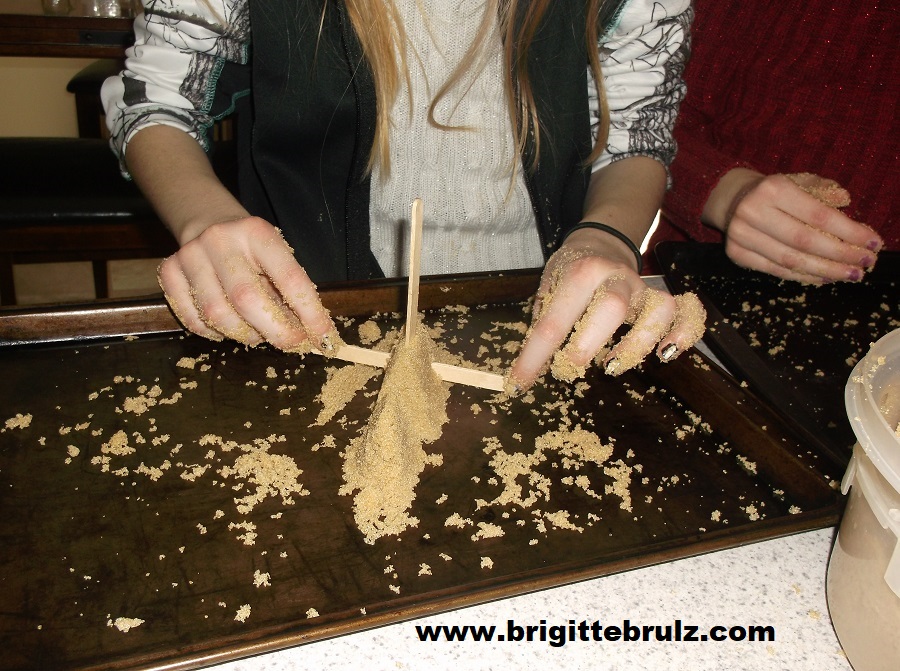
Anyways, my daughters played with brown sugar while I was writing the post for Hands On As We Grow, so I could take some pictures of what I was talking about. One of my daughters made a brown sugar submarine.

brown sugar creation

My other daughter worked on building a brown sugar tower.

brown sugar creation

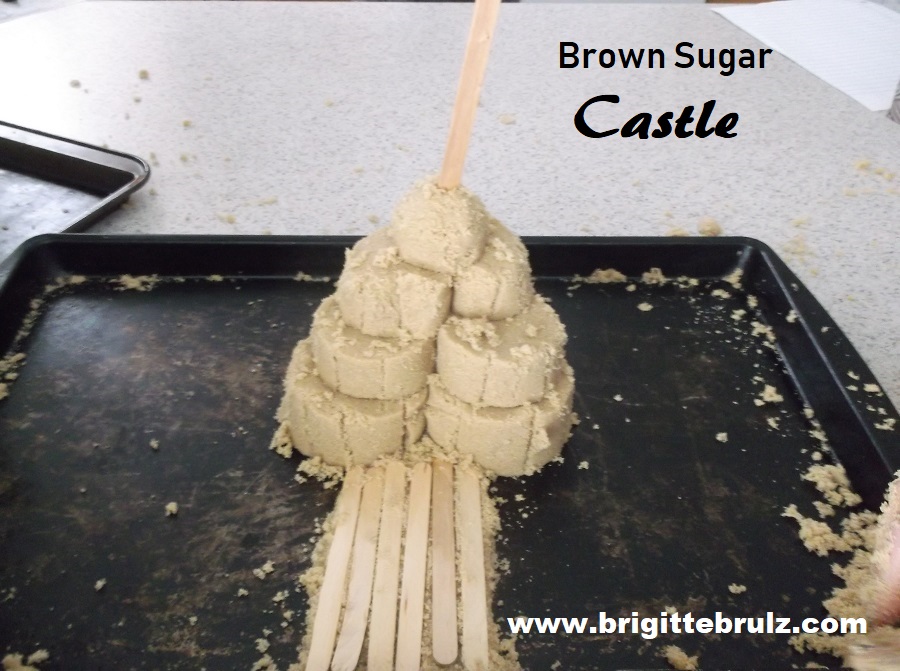
They worked together and created a castle with a craft stick flag and bridge.

brown sugar castle

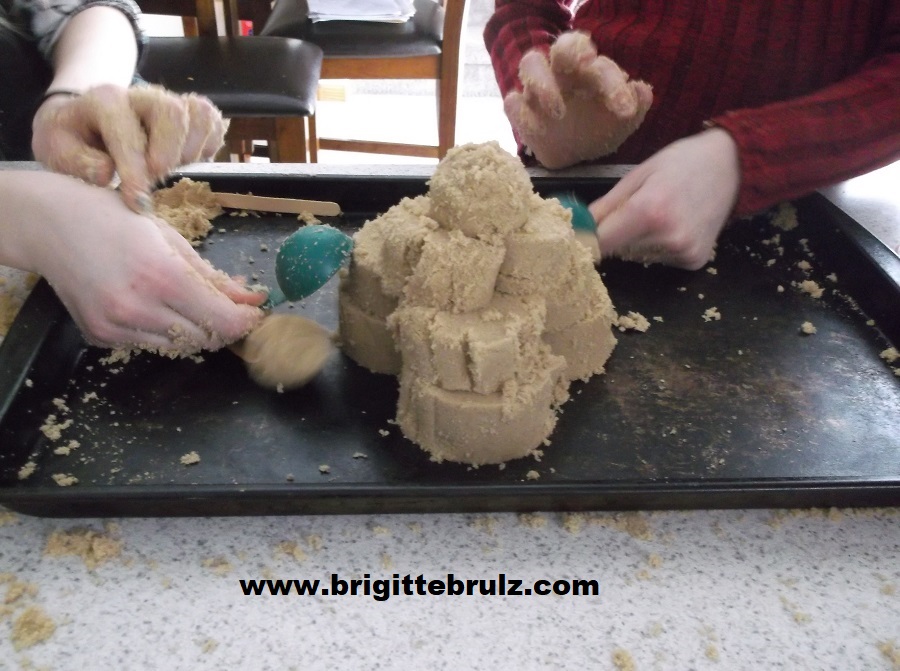
They had fun trying to destroy their brown sugar castle with little catapults (measuring spoons) filled with cannons (packed brown sugar).

destroying brown sugar castle

I had cookie trays for them to use to try to contain all of the brown sugar. We still ended up with brown sugar on the counter, floor, and them. All of which was rather easy to clean up. The remaining brown sugar went back into a bowl for the next time they want to build brown sugar creations.

Building with brown sugar is messy, but it’s fun!

Check out the following posts for more building fun.


Crafts and Projects · Jobs of a Preschooler

Become a Little Scientist on a Walk

It’s not officially summer yet, but many kids will be starting summer break really soon. As the weather continues to warm up, I am looking forward to taking walks with my family.

My daughters and I have enjoyed many nature walks over the years. We have had the opportunity to take walks at nature centers, state parks, national parks, and on various other walking trails.

Did you know kids can collect Junior Ranger badges by completing tasks at national parks? My daughters have each received a badge for completing a packet and going on a guided hike with a park ranger at one national park. You can call national parks and ask what they offer for the Junior Ranger program. Otherwise, you can find more information on the National Park Service’s website here if you are interested. I have seen some families go to multiple national parks and collect badges at each one. National parks also often offer free programs throughout the summer (and the year) in addition to the Junior Ranger program. Normally the information for upcoming events can be found on their websites.

My daughters have also learned a lot about national parks through the National Park Service’s Webrangers program. This is a free online program, which you can access on the National Park Service’s website here. You are required to create a user id and password so all of the completed activities can be saved. Kids can earn virtual badges and rewards as they complete each activity. Children are also offered a physical badge once all of the activities are finished. My daughters learned quite a bit while completing the Webranger activities.

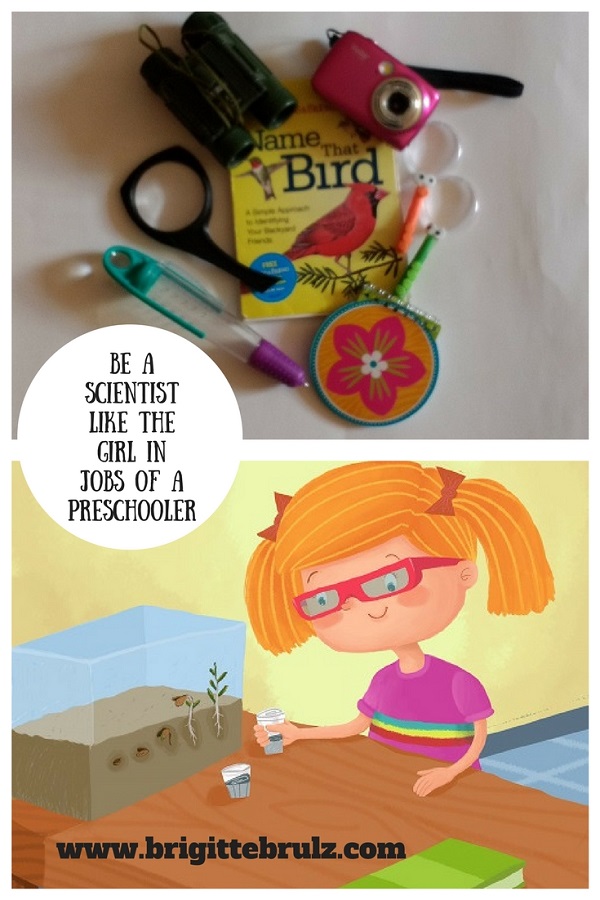
Maybe you would enjoy walks with your little one on a “mission as a scientist”. Your little one could be a scientist just like the girl in the book Jobs of a Preschooler. You may want to search for something specific each time you go on a nature walk such as:

I’ve noticed when we search for specific items, my daughters seem more focused on looking around and exploring than if we are just “going for a walk”.

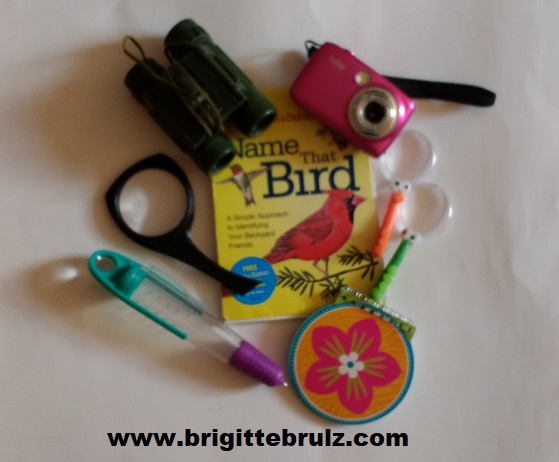
For even more fun, you could pack a little “scientist bag” filled with a notebook, magnifying glass, binoculars, camera, and pencils. Depending on what you are searching for, a little guide book may also be helpful to identify animal tracks, flowers, etc. (Libraries often have guide books to borrow if you don’t have one.) Sunscreen and bug spray are also beneficial on nature walks, although it is best to keep it off of hands especially if handling interesting finds.

scientist supplies

Your little one may have fun drawing, taking pictures, and studying (as long as it is safe to do so) interesting discoveries along the way. The drawings and pictures can be added to a little science journal (a notebook or binder with papers) if desired. Both of my daughters have had fun creating their own binders filled with photos they have taken. If you choose to collect items, you may want to check policies. Some places have rules against taking any items, so all of the leaves, flowers, acorns, etc. must remain there.

Outdoor exploration often leads to conversations and research to find more information about specific items. For example, what is the difference between butterflies and moths? What are the different kinds of animal homes?

Hands-on learning can be a lot of fun. I don’t know about you, but I end up learning quite a bit along with my daughters when we do activities like this. The world is our classroom. Have fun discovering new things and learning as you take a walk!

I will be writing posts with pictures based on themed specific nature walks for you to see (and share) with your little ones. Stay tuned!

Jobs of a Preschooler- I'm a scientist...

What will you discover on your next walk?